দেখতে দেখতে কেটে গেল ২০১৯। পেঁয়াজ-লবণ ছাড়াও ১০ টাকায় চা-চপ-সিঙ্গারা থেকে শুরু করে পদ্মা সেতুতে মাথা, প্রিয়া সাহা, ডিসির খাস-কামরা ও 'ঢেলে দেই' - সবই ছিল এ বছরের ট্রেন্ডিং ইস্যুর তালিকায়।
from BBC News বাংলা - খবর, সর্বশেষ খবর, ব্রেকিং নিউজ, বিশ্লেষণ https://ift.tt/2ZIA14t
via IFTTT
Tuesday, December 31, 2019


New top story from Time: Here’s How Conservatives Are Using Civil Rights Law to Restrict Abortion
Six states passed laws in 2019 banning abortions once a “fetal heartbeat” is detected, which can be as early as six weeks into pregnancy. While most of these new laws were challenged in court and are temporarily blocked, the trend has continued: another 10 states introduced similar bills in 2019 and more are expected this year.
The sudden success of these measures is not an accident. They are the result of a concerted new strategy by abortion opponents, researchers have found.
Instead of focusing on religious or women’s health concerns, supporters of Georgia’s “heartbeat” bill advanced their arguments by “co-opting the legal successes of progressive movements” such as the civil rights movement and the LGBT rights movement, according to a new study, published in Sexual and Reproductive Health Matters. Throughout the testimony surrounding the bill, Georgia state lawmakers and community members argued that fetuses are a class of persons entitled to protection under the law, just like black Americans and LGBT Americans.
“If you think back to the same sex marriage debate, the state of Massachusetts recognized the franchise of marriage more expansively in Massachusetts than the minimum requirement of federal law,” argued bill sponsor and Georgia State Rep. Ed Setzler in a quote mentioned in the study. “This is walking that same tradition.”
The idea that fetuses deserve rights is not a new concept, but it was once considered a fairly fringe idea. When the first “heartbeat” bill appeared in Ohio in 2011, anti-abortion groups were divided over whether to support it. But since President Donald Trump got elected and tipped the balance of the Supreme Court, abortion opponents have embraced the strategy.
“We were surprised at the references to particular progressive victories, including things like the passage of the 14th Amendment [and] same sex marriage,” says Dabney Evans, an associate professor at Emory University’s Rollins School of Public Health and co-author of the study, which may be the first systematic analysis of the political language around early abortion bans in the United States. She and other researchers examined the testimony and legislative debate advocating for Georgia’s six-week abortion ban last March.
So-called “heartbeat” bills have been controversial in part because they seek to ban abortions at a stage when many women do not yet know they are pregnant, which reproductive rights advocates say means they ban nearly all abortions. Doctors like Dr. Jen Gunter have also noted that, despite the frequently used “heartbeat” language, the cardiac activity measured at six weeks comes from a cluster of cells called the fetal pole rather than from something that looks like a heart.
Evans and her co-author, Subasri Narasimhan, a post-doctoral fellow at Emory’s Center for Reproductive Health Research in the Southeast, noted several examples of legislators and community members “misrepresenting medical science” in their support of the Georgia bill. But the arguments went further, the study says, explaining that the Georgia bill’s supporters were effectively “foreshadowing their legal strategy for a future claim before the U.S. Supreme Court.”
The study outlines three major arguments that the bill’s supporters used to advance their argument. They first asserted that a “heartbeat” was a sign of life and therefore personhood. Then lawmakers and community members said that if fetuses were living, they were a “vulnerable” class of people who deserve rights and protections. And finally, the study explains, the bill’s supporters said that Georgia should be allowed to expand rights and protections to this new group as a matter of states’ rights.
In the Georgia legislature, Setzler, the bill’s sponsor, cited the Dred Scott v. Sanford decision to imply that the Supreme Court had similarly ruled incorrectly in Roe v. Wade. “A 7-2 decision of the U.S. Supreme Court in 1857 said Dred Scott was property, he wasn’t a person,” Setzler said during a committee hearing in March. “The same Supreme Court, by a 7-2 decision, that didn’t recognize Dred Scott, didn’t recognize the humanity of a child in the womb and it’s our opportunity to fix that.”
Another state legislator balked at the comparison and referenced the Three-Fifths compromise as a time when legislators dangerously intervened to decide who was human. But Setzler was undeterred: “Can you help me, through this bill, fully recognize them so it’s not three fifths of a person but a full person?” he asked.
The researchers called these comparisons “false equivalencies,” but added that they add a new dimension to the anti-abortion advocates’ playbook. While previous debates over abortion might have included religious language or restrictions on what providers must do in the name of women’s safety, the study found very little religious rhetoric, and concerns about women’s health were largely brought up by the bill’s opponents.
“In the recent past, anti-abortion advocates have responded by co-opting the language of women’s health and science, focusing most recently on women’s health protection,” the researchers wrote. “While not abandoning this explanatory position, current anti-abortion efforts like HB 481 appear to be layering on a protectionist argument for unborn persons.”
Pro-abortion advocates who fought Georgia’s bill — including those now challenging it in court — have argued that this and other heartbeat bills would actually harm precisely the communities that civil rights laws are designed to protect. An abortion ban, they say, will disproportionately hurt people of color and LGBT people in Georgia who already face barriers to accessing health care.
As is standard practice, the study does not include the names of participants it quotes, but all of the material the researchers analyzed comes from publicly available videos of committee hearings and legislative sessions. TIME reviewed the videos to match Setzler’s quotes with those mentioned in the study.
While Evans and Narasimhan only studied the arguments around Georgia’s abortion ban, they believe their findings will be useful to researchers, community members, activists and legislators in many other states. That’s in large part because many of the “heartbeat” bills being considered around the country are based on model legislation from a group called Faith2Action, which says it provides “the largest network of pro-family organizations.”
“In public health, often people examine the outcomes of policy or legislation, but the process itself is often overlooked,” Narasimhan says. Here, the process is still ongoing as many state legislatures will reconvene this month, and Narasimhan expects other states to make similar arguments to those made in Georgia.
The study also provides a learning opportunity for voters, she added. “This is part of the democracy that we live in,” she says. “This legislative debate is public record. Our analyzing it in this systematized way is bringing forth information into the public record as well and allowing people to hear and see what these debates look like and what tactics are being used for things that will ultimately impact them.”

Hospitals and Schools Are Being Bombed in Syria. A U.N. Inquiry Is Limited. We Took a Deeper Look.

By BY MALACHY BROWNE, CHRISTIAAN TRIEBERT, EVAN HILL, WHITNEY HURST, GABRIEL GIANORDOLI AND DMITRIY KHAVIN from NYT World https://ift.tt/39t4ojT
via IFTTT

চিকিৎসাশাস্ত্রে বছরের সেরা আবিষ্কার: 'চাঁদে মানুষ হাঁটার প্রথম মুহূর্ত যেন’
নিরাময় অযোগ্য অসুখের চিকিৎসা পদ্ধতি আবিষ্কার থেকে শুরু করে প্যারালাইসিস সারানোর উপায় বের করা এবং মৃত্যুর পরেও মস্তিষ্ককে বাঁচিয়ে রাখার রাস্তা খুঁজে পাওয়ার মত গুরুত্বপূর্ণ ঘটনা রয়েছে এ বছর।
from BBC News বাংলা - খবর, সর্বশেষ খবর, ব্রেকিং নিউজ, বিশ্লেষণ https://ift.tt/2ZCZtsm
via IFTTT
from BBC News বাংলা - খবর, সর্বশেষ খবর, ব্রেকিং নিউজ, বিশ্লেষণ https://ift.tt/2ZCZtsm
via IFTTT
New top story from Time: North Korea Warns That It Will Unveil a New Strategic Weapon Soon
SEOUL, South Korea (AP) — North Korean leader Kim Jong Un has accused the Trump administration of dragging its feet in nuclear negotiations and warned that his country will soon show a new strategic weapon to the world as it bolsters its nuclear deterrent in face of “gangster-like” U.S. sanctions and pressure.
The North’s state media said Wednesday that Kim made the comments during a four-day ruling party conference held through Tuesday in the capital Pyongyang, where he declared that the North will never give up its security for economic benefits in the face of what he described as increasing U.S. hostility and nuclear threats.
Kim’s comments came after a monthslong standoff between Washington and Pyongyang over disagreements involving disarmament steps and the removal of sanctions imposed on the North.
“He said that we will never allow the impudent U.S. to abuse the DPRK-U.S. dialogue for meeting its sordid aim but will shift to a shocking actual action to make it pay for the pains sustained by our people so far and for the development so far restrained,” the Korean Central News Agency said, referring to the North by its formal name, the Democratic People’s Republic of Korea.
Kim added that “if the U.S. persists in its hostile policy toward the DPRK, there will never be the denuclearization on the Korean Peninsula and the DPRK will steadily develop necessary and prerequisite strategic weapons for the security of the state until the U.S. rolls back its hostile policy,” according to the agency.
However, Kim showed no clear indication of abandoning negotiations with the United States entirely or restarting tests of nuclear bombs and intercontinental ballistic missiles he had suspended under a self-imposed moratorium in 2018.
He did issue a warning that there would be no grounds for the North to get “unilaterally bound” to the moratorium any longer, criticizing the United States for continuing its joint military exercises with rival South Korea and also providing the South with advanced weaponry.
“In the past two years alone when the DPRK took preemptive and crucial measures of halting its nuclear test and ICBM test-fire and shutting down the nuclear-test ground for building confidence between the DPRK and the U.S., the U.S., far from responding to the former with appropriate measures, conducted tens of big and small joint military drills which its president personally promised to stop and threatened the former militarily through the shipment of ultra-modern warfare equipment into (South Korea),” the KCNA quoted Kim as saying.
Some experts say North Korea, which has always been sensitive about electoral changes in U.S. government, will avoid engaging in serious negotiations for a deal with Washington in coming months as it watches how Trump’s impending impeachment trial over his dealings with Ukraine affects U.S. presidential elections in November.
Kim and President Donald Trump have met three times since June 2018, but negotiations have faltered since the collapse of their second summit last February in Vietnam, where the Americans rejected North Korean demands for broad sanctions relief in exchange for a partial surrender of its nuclear capabilities.
Kim’s speech followed months of intensified testing activity and belligerent statements issued by various North Korean officials, raising concerns that he was reverting to confrontation and preparing to do something provocative if Washington doesn’t back down and relieve sanctions.
The North announced in December that it performed two “crucial” tests at its long-range rocket launch site that would further strengthen its nuclear deterrent, prompting speculation that it was developing an ICBM or planning a satellite launch that would provide an opportunity to advance its missile technologies.
North Korea also last year ended a 17-month pause in ballistic activity by testing a slew of solid-fuel weapons that potentially expanded its capabilities to strike targets in South Korea and Japan, including U.S. military bases there. It also threatened to lift a self-imposed moratorium on the testing of nuclear bombs and ICBMs.

New top story from Time: Trump Says He’ll Sign the First Phase of a China Trade Deal on Jan. 15
(WEST PALM BEACH, Fla.) — The first phase of a U.S.-China trade agreement will be inked at the White House in mid-January, President Donald Trump announced Tuesday, adding that he will visit Beijing at a later date to open another round of talks aimed at resolving other sticking points in the relationship.
The so-called “Phase One” agreement is smaller than the comprehensive deal Trump had hoped for and leaves many of the thorniest issues between the two countries for future talks. Few economists expect any resolution of “Phase Two” before the presidential election in 2020.
And the two sides have yet to release detailed documentation of the pact, making it difficult to evaluate.
Trump said high-level Chinese government officials will attend the signing on Jan. 15 of “our very large and comprehensive Phase One Trade Deal with China.”
“At a later date I will be going to Beijing where talks will begin on Phase Two!” Trump said in his tweet. He did not announce a date for the visit.
China has agreed to boost its U.S. goods imports by $200 billion over two years, the U.S. Trade Representative said Dec. 13 when the deal was announced. That includes increased purchases of soybeans and other farm goods that would reach $40 billion a year.
China has also agreed to stop forcing U.S. companies to hand over technology and trade secrets as a condition for gaining access to China’s vast market, demands that had frustrated many U.S. businesses.
In return, the Trump administration dropped plans to impose tariffs on $160 billion of Chinese goods, including many consumer items such as smartphones, toys and clothes. The U.S. also cut tariffs on another $112 billion of Chinese goods from 15% to 7.5%.
Many analysts argue that the results are fairly limited given the costs of the administration’s 17-month trade war against China. U.S. farm exports to China fell in 2018 to about one-third of the peak reached six years earlier, though they have since started to recover.
Import taxes remain on about half of what the U.S. buys from China, or about $250 billion of imports. Those tariffs have raised the cost of chemicals, electrical components and other inputs for U.S. companies. American firms have cut back on investment in machinery and other equipment, slowing the economy’s growth this year.
A study last week by economists at the Federal Reserve found that all of the Trump administration’s tariffs, including those on steel and aluminum as well as on Chinese imports, have cost manufacturers jobs and raised their costs. That’s mostly because of retaliatory tariffs imposed by China and other trading partners.
Many experts in both the U.S. and China are skeptical that U.S. farm exports can reach $40 billion. The most the U.S. has ever exported to China before has been $26 billion. China has not confirmed the $40 billion figure.
Still, the agreement has helped calm concerns in financial markets and among many U.S. businesses that the trade war with China would escalate and potentially lead to a recession. The approval by the Democratic-led House of the Trump administration’s revamp of the NAFTA agreement has also reduced uncertainty around global trade.
Since the U.S.-China pact was first announced in October, the stock market has risen steadily and is on track to finish the year with its biggest gain since 2013. Most analysts now forecast that the economy will grow at a steady if modest pace in 2020, extending the current record-long expansion.
The Phase 1 deal has left some major issues unresolved, notably complaints that Beijing unfairly subsidizes its own companies to give them a competitive advantage in world markets.
The Trump administration argues — and independent analysts agree — that China uses the subsidies in an effort to gain an advantage in cutting-edge fields such as driver-less cars, robotics and artificial intelligence.
Another sticking point in future talks will likely involve rules around data flows, with China looking to require more foreign companies to keep data they use in China as opposed to stored overseas.
“It’s a very toxic brew and I don’t know that we’re really going to see much progress on it,” said Mary Lovely, a trade economist at the Peterson Institute for International Economics.

New top story from Time: After a Strong 2019, Wall Street Warns of a Slower Road Ahead
(NEW YORK) — After a year of nirvana, investors may need to get ready for something a little more normal.
Markets are coming off a fabulous 2019, where stocks and bonds around the world climbed in concert. But for the next year — and decade, in fact — Wall Street is telling investors to set their expectations considerably lower.
It’s not calling for another crash like the U.S. stock market suffered just over a decade ago. Or for another run like the last 10 years, where the S&P 500 returned more than 13% on an annualized basis. A gain less than half of that may be more likely, both for next year and annually for the coming decade.
“People need to have a more realistic expectation of what returns are going to be,” said Greg Davis, chief investment officer at Vanguard. “That means investors who are saving for retirement or for college education will likely need to set aside more, because returns won’t be as generous as what we’ve seen over the last decade.”
It’s not because Wall Street sees the U.S. economy falling into a recession, at least not in 2020, even though that’s been a recurring fear for much of the last decade. Much of Wall Street expects the economy to chug modestly higher next year.
Instead, it’s a simple matter of math. Stocks and bonds don’t have as much room to rise after their stellar 2019, analysts say. Starting points matter, and investments began this year at a low point after recession worries pounded markets in December 2018. U.S. stocks will start 2020, meanwhile, close to their highest levels ever.
Wall Street has been busy trying to rein in expectations.
Vanguard forecasts U.S. stocks will return 3.5% to 5.5% annually over the coming decade. Even toward the top end of that range, it’s only half what the market has returned historically. Foreign stocks might offer a bit more, at roughly 7.5% annually, but U.S. bonds look set to offer only 2% or 3% annually over the next decade, according to Vanguard.
Of course, any prediction about where investments will end up is only a guess, no matter how educated. Many on Wall Street came into this year expecting only modest returns given all the worries about interest rates and a possible recession. Now, the S&P 500 is about to close out its second-best year of the last two decades.
But for bonds, the reasons for lower expected returns are easy to see. Bonds pay much less in interest than one or 10 years ago. The 10-year Treasury now has a yield of 1.92 %, versus 2.82% a year ago and 3.54 % a decade ago. For bonds to return more than their yields, rates will need to drop even lower.
Some banks along Wall Street have relatively healthy expectations for stocks in 2020 — but few if any are calling for a repeat of 2019’s surge for the S&P 500, which was at 28.9% as of Tuesday’s close. Bank of America Merrill Lynch sees the index ending 2020 at 3,300, which would be a 2.2% rise, for example. Goldman Sachs is more bullish, with a target of 3,400, but that would still be less than a fifth of this year’s gain.
Stocks are more expensive than a year ago on a host of different measures. One of the most commonly used is how a stock’s price compares to its profit over the preceding year. By that measure, the S&P 500 is trading at 21.1 times its earnings. That’s more expensive than at the start of the year, when it was at 16.5, or its average over the last two decades of 17.7, according to FactSet.
Low interest rates should help keep this price-earnings valuation high, analysts say. So will a U.S.-China trade conflict that’s hopefully no longer ramping higher, analysts say. The diminished threat of a recession should keep investors willing to pay relatively high price-earnings ratios. But the threat of policy changes in Washington, D.C., could act as a counterweight.
“There is a lot of nervousness around the elections,” said Lisa Thompson, equity portfolio manager at Capital Group. “The elections could provide some interesting opportunities for investors, particularly in the first half of the year.”
She’s the type of investor who sees volatile markets, where prices are swinging higher and lower, as “interesting opportunities” because she can use them to buy stocks she likes at lower prices.
President Trump has ushered in lower taxes and lighter regulations for businesses, which investors have seen as incontrovertible wins for investments regardless of their politics. Democrats running to unseat him, meanwhile, could reverse that momentum and target some industries in particular, such as health care. That could lead to big swings for stocks early in 2020 as Democratic candidates try to stand out in a winnowing field.
Even if the worst-case scenario were to come to pass, though, and the economy were to fall into a recession, many professional investors say they aren’t worried about a crash like 2007-09 where stock investors lost more than half their savings. Investors have remained hesitant to plow their money into stocks, even after this decade-long run, so fund managers say they don’t see grossly overvalued markets as there were just over a decade ago.
“When the cycle does end, we don’t see bubbles out there like in 2008, 2009,” said Saira Malik, head of equities at Nuveen. “I think people are nervous.”

New top story from Time: Time’s Up for ‘Totes:’ A New Batch of Banned Words Is Out
DETROIT (AP) — Sorry, Latin teachers: Quid pro quo has got to go.
The centuries-old Latin phrase, which means an exchange of favors, leads a Michigan university’s 45th annual “List of Words Banished from the Queen’s English for Misuse, Overuse and General Uselessness.”
Quid pro quo got new life during the impeachment of President Donald Trump. He repeatedly declared there was no “quid pro quo” with Ukraine over U.S. military aid to that country and an investigation of former Vice President Joe Biden’s son.
“No quid pro quo was offered during the creation of this meticulously curated list of words,” said Rodney Hanley, president of Lake Superior State University in Sault Ste. Marie.
The school each year invites the public to nominate words and phrases that seem tired or annoying through everyday speech, news coverage and more. The latest list has more than a dozen, including “artisanal,” “influencer,” “living my best life” and “chirp.”
There’s “jelly,” short for jealous, and “totes,” a nod to totally. And in a baby boomer revolt, it’s apparently time to scratch “OK, boomer.”
“Boomers may remember, however, that generational tension is always present,” university wordsmiths said. “In fact, it was the boomers who gave us the declaration, ‘Don’t trust anyone over 30!’”
Finally, the list has “vibe/vibe check,” “mouthfeel,” “I mean,” “literally” and “curated.”
There now are more than 1,000 banned words or phrases in the Lake Superior archive. The late W.T. Rabe, who was public relations director, and faculty came up with the first list at a New Year’s Eve party in 1975.
“Since then, the list has consisted entirely of nominations received from around the world throughout the year,” the school said.

২০১৯ সালের ব্যতিক্রমী কিছু খবর
বর্ষ পরিক্রমায় এসব কিছু খবর এসেছে, যা সবার নজর কেড়েছিল। এর কিছু ছিল মজার, কিছু অভিনব। এখানে সেরকম কয়েকটি খবর তুলে ধরা হলো।
from BBC News বাংলা - খবর, সর্বশেষ খবর, ব্রেকিং নিউজ, বিশ্লেষণ https://ift.tt/36h7B4m
via IFTTT
from BBC News বাংলা - খবর, সর্বশেষ খবর, ব্রেকিং নিউজ, বিশ্লেষণ https://ift.tt/36h7B4m
via IFTTT


Texas Churchgoers Welcomed the Poor, but Sensed This One Was Trouble

By BY DAVE MONTGOMERY, ANEMONA HARTOCOLLIS AND RICK ROJAS from NYT U.S. https://ift.tt/37mK6XF
via IFTTT

Monday, December 30, 2019
New top story from Time: Times Square Will Be the ‘Safest Place on Earth’ for New Year’s Eve, NYPD Says
NEW YORK (AP) — New York City’s counterterrorism czar expects Times Square to be “the safest place on the planet Earth” on New Year’s Eve.
Thousands of police officers will be on duty for Tuesday night’s festivities, along with specialized units armed with long guns, bomb-sniffing dogs and other measures.
For the first time, police drones are expected to keep watch over the big, confetti-filled celebration — a year late after rain grounded the department’s unmanned eye-in-the-sky last year.
This year’s forecast calls for some clouds, but no rain and none of the bitter cold that iced out spectators two years ago.
The NYPD’s Deputy Commissioner for Intelligence and Counterterrorism, John Miller, said stacking various security tools and techniques gives police “multiple chances to catch something coming through.”
“Times Square is probably going to be the safest place on the planet Earth on New Year’s Eve because nobody else puts that kind of effort into an event like this,” Miller said.
Police Commissioner Dermot Shea said there are no specific, credible threats to the event, which brings hundreds of thousands of people to midtown Manhattan and attracts millions of TV viewers. Post Malone, BTS and Alanis Morissette are scheduled to perform on stages in the heart of Times Square.
Shea said spectators should feel safe but encouraged them to remain vigilant and alert an officer or call a police hotline if they feel something is amiss.
“This is going to be one of the most well-policed, well-protected celebrations in the entire world and we’ll have another safe and enjoyable New Year’s Eve,” Shea said.
Streets in and around Times Square will be closed to car traffic hours before the ball drops and police cars and sand-filled sanitation trucks will be positioned to stop vehicles from driving into the crowd.
Everyone showing up for the confetti-filled festivities should expect to be wanded with metal detectors before being ushered to one of 65 viewing pens set up around Times Square to prevent overcrowding.
Backpacks, chairs and coolers are banned, as well as personal drones. And don’t think about popping champagne or lifting a Maddog 20/20 to ring in 2020. The NYPD says alcohol is strictly prohibited.
There aren’t any bathrooms, and anyone leaving won’t be allowed back to their original spot.
Some revelers are sure to end up featured on Ryan Seacrest’s “Rockin’ Eve” broadcast, especially if they’re wearing those kitschy “2020” glasses, but there’s a good chance everyone in Times Square will be caught on one camera or another.
Police will be monitoring more than 1,000 security cameras, along with feeds from police helicopters and the drones.
Several of the NYPD’s drones are equipped with thermal-imaging and 3D-mapping capabilities and strong camera lenses that can greatly magnify a subject.
Since last year’s New Year’s Eve rainout, they’ve been used at other big events in the city, such as the Women’s March and St. Patrick’s Day Parade.


New top story from Time: Police and Victims Warn Against Firing Guns on New Year’s Eve
Kaitlyn Kong thought she had been punched hard in the abdomen as she stood among thousands of people in downtown Raleigh, North Carolina, as the new year arrived a year ago. Her best friend, standing next to her, thought Kong had been stabbed as blood poured from a wound.
It wasn’t until Kong underwent an X-ray that she and hospital medical staff realized she had been shot after someone fired a gun into the air to celebrate the new year.
Although rare, people being shot by celebratory gunfire on New Year’s Eve and other holidays like the Fourth of July does happen, prompting law enforcement authorities to caution people that bullets fired into the air can endanger people’s lives.
Raleigh police Lt. Mario Campos said the city receives a small number of calls about gunfire during New Year’s Eve celebrations in the city but would not discuss what happened to Kong, saying it remains under investigation. Raleigh police said at the time that the shot could have been fired from several blocks away.
“Our message has always been not to do it because it’s dangerous and illegal in our city,” Campos said. “Bullets can travel a long distance. Any gunfire discharged into the air has to come down and land on something.”
A 9-year-old boy in Cleveland was wounded by a stray bullet last New Year’s Eve as he watched television inside his family’s home. The boy’s mother declined to be interviewed. Another 9-year-old boy in Atlanta was shot in the abdomen by celebratory gunfire early Jan. 1 while he and his family set off fireworks.
A 4-year-old boy was killed in 2010 in Decatur, Georgia, when an AK-47 round penetrated a church roof and struck him in the head as he sat next to his parents during a New Year’s Eve service.
Kong, then a senior at the University of North Carolina-Chapel Hill, headed to downtown Raleigh with her friend for the city’s family-friendly First Night celebration. Kong, 23, said she was pointing her phone upward to capture video of fireworks as confetti floated down on the crowd when it suddenly felt as if she had been punched “super hard,” prompting her to clutch her friend’s shoulder, not able to speak.
Bystanders helped move her out of the crowd, and a police officer called for an ambulance while pressure was applied to the wound.
“I didn’t think it was that serious, but I was hurting a lot,” Kong said.
It turned out to be quite serious. The bullet entered her chest and penetrated a lung, her diaphragm and stomach before lodging near her hip. Kong underwent a four-hour surgery. She recovered enough to return to classes days later with some assistance. She graduated in May with a degree in environmental studies.
“If it had been any higher, it could have done some permanent damage, to say the least,” Kong said.

A 2004 study from the Centers for Disease Control and Prevention said people struck by gunfire shot into the air are most likely to be hit in the head.
That’s what happened to Texas state Rep. Armando Martinez as he celebrated the new year at a friend’s home in Weslaco, Texas, on Jan. 1, 2017. He and his family had waited in the friend’s garage until gunfire had subsided to let off fireworks, he said.
Martinez told NBC News that his wife had just wished him a happy new year with a kiss when a .223-caliber round fell from the sky and penetrated his skull. It felt, he said, as if he had been “hit by a sledgehammer.”
“I was extremely lucky,” Martinez said. “My surgeons said if it went a couple more millimeters deeper, I may not have been able to have this conversation right now.”
Carl Leisinger III, a retired New Jersey State Police major and supervisor of the agency’s forensics laboratory, said a 9 mm round like the one that wounded Kong would typically leave the barrel at around 1,100 feet per second and then fall down at 200 to 300 feet per second. How far a bullet fired into the air travels sideways will depend on wind and other factors, he said.
“She’s very fortunate she didn’t die,” Leisinger said.
Kong said she plans to celebrate somewhere this New Year’s Eve, but not in downtown Raleigh.
“You can’t let it stop you from living your life,” she said. “Maybe I’m that kind of person.”

New top story from Time: Colombian Soccer Star Seeks Answers on His Disappeared Father
BOGOTA, Colombia (AP) — The newly appointed chief of Colombia’s army says he is willing to meet with soccer star Juan Fernando Quintero to discuss his father’s disappearance more than 20 years ago.
Gen. Eduardo Zapateiro said during a military ceremony on Monday he “shares the pain” of Quintero’s family and added that he is willing to meet with the River Plate and Colombian national team midfielder to discuss his father’s final days.
Jaime Quintero was last seen in 1995 at an army base in the city of Carepa, which was then commanded by Zapateiro. According to Quintero’s relatives, Jaime was carrying out his compulsory military service, and disappeared after falling out with Zapateiro, who wanted to transfer him to another base due to his unruly behavior.
Following Zapateiro’s appointment as army chief last week, Quintero’s relatives gave interviews on local media in which they complained about the general’s promotion, saying he still had not answered questions on Jaime’s disappearance. Juan Fernando Quintero, who was 2 years old when his father went missing, took to Twitter on Monday morning, asking for a meeting with the general and saying that he had the right to know the truth about his father.
Zapateiro denies involvement in the disappearance of Jaime Quintero, and in a statement published yesterday the military cited investigations conducted by local courts, which blamed rebel groups for the crime.
According to Colombia’s National Center for Historical Memory, more than 80,000 people were forcibly disappeared in Colombia between 1958 and 2015, as the military and rebel groups fought for control of rural areas.

গ্রেটা থুনবার্গের পিতা: 'সে সুখী, কিন্তু আমার চিন্তা হয়'
পরিবেশের ব্যাপারে সচেতনতা তৈরিতে ১৬ বছরের এই কিশোরীর লড়াই দেখে লক্ষ্য লক্ষ্য মানুষ অনুপ্রাণিত হয়েছে। গ্রেটাকে নিয়ে কথা বলেছেন তার পিতা স্ভ্যান্টে থুনবার্গ।
from BBC News বাংলা - খবর, সর্বশেষ খবর, ব্রেকিং নিউজ, বিশ্লেষণ https://ift.tt/2MF5lf9
via IFTTT
from BBC News বাংলা - খবর, সর্বশেষ খবর, ব্রেকিং নিউজ, বিশ্লেষণ https://ift.tt/2MF5lf9
via IFTTT
New top story from Time: New Line of ‘Scientist Barbies’ Refashions Dolls as Marine Biologists, Astrophysicists and More
(SALT LAKE CITY) — When Nalini Nadkarni was a kid, she’d run home from school, climb into one of the eight maple trees in her parents’ backyard and spend an afternoon there with an apple and a book.
That time in the treetops set the tone for the rest of her life: She’s now a forest ecologist at the University of Utah who’s dedicated her career to studying rain forest canopies.
She’s also always looking for new ways to get people interested in science, from fashion made with nature imagery to science lectures at the state prison.
“I’ve tried for years and years to bring the science I do and understand to people outside of academia,” she said.
Her childhood memories made her particularly interested in reaching children. After her own 6-year-old daughter asked for a Barbie, Nadkarni decided to re-fashion the iconic dolls as a scientist-explorer in rubber boots rather than high heels.
“Lots of girls, and some little boys, love Barbie,” Nadkarni said. “It’s almost aspirational, they want to be Barbie.”
That was about 15 years ago. Nadkarni said Barbie-maker Mattel wasn’t interested in the idea then, so she decided to redo dolls herself, using gear she collected.
She scoured thrift stores and eBay for Barbie dolls and enlisted help from volunteer seamstresses. She called the creation “Treetop Barbie” and began selling them at cost on her website.
Last year, Mattel began working with National Geographic to create a new line of scientist Barbies. Nadkarni has a longstanding relationship with National Geographic, so when the non-profit reached out for help, she quickly agreed.
Nadkarni joined a team of female scientists advising Mattel as it made the line of dolls that includes a marine biologist, astrophysicist, photojournalist, conservationist and entomologist.
Sales began in the summer. As a thank-you, Mattel sent Nadkarni a one-of-a-kind doll with tree-climbing gear and full dark hair woven with strands of white that made the doll resemble the scientist.
For Nadkarni, the company’s investment in the dolls reflects a broader cultural shift toward recognizing women in science, math and technology that could spark an appreciation for science even among kids who don’t end up entering the field.
Mattel said in a statement that the purpose of Barbie dolls for the last 60 years has been to “inspire the limitless potential in every girl,” pointing out that Barbie was portrayed in other science and math-based careers long before the new line, including as an astronaut in 1965.
“Barbie allows girls to try on new roles through storytelling by showing them they can be anything and, through our partnership with National Geographic, girls can now imagine themselves as an astrophysicist, polar marine biologist and more,” said Lisa McKnight, general manger of Barbie Dolls for Mattel.
It’s not known, though, how career Barbies might affect kids’ aspirations. A 2014 study by Oregon State University found that girls who played with the dolls told researchers they could do fewer jobs than boys — even if they played with a doctor Barbie.
The study didn’t examine the girls’ reasoning, but researchers speculated that Barbie might be an inherently sexualized doll, said associate professor Aurora Sherman, who worked on the paper.
Putting the same doll in a professional outfit likely won’t do much to change perceptions about what women can do, she said. But it might help to use it as a starting point for conversations about women in science and math.
“Its really going to depend on how that doll is experienced, and what adults are doing to drive home that message,” she said.
Barbie’s icon status gives the doll cultural sway, and the new dolls have the potential to normalize the idea of women in science and engineering, said Kris Macomber, a sociology professor at Meredith College in Raleigh, North Carolina.
Barbie sales have been increasing as the becomes available in different body shapes and careers, but there’s only so much a toy can do to change broader attitudes about what professions chosen by girls as they grow up, she said.
“Barbie does not hold all the power to change culture,” Macomber said. “But it does contribute.”


New top story from Time: Ex-Nissan Boss Carlos Ghosn Arrives in Beirut With Japan Trial Pending
(BEIRUT) — Former Nissan chairman Carlos Ghosn, who is awaiting trial in Japan on charges of financial misconduct, has arrived in Beirut, a close friend said Monday. He apparently jumped bail.
It was not clear how Ghosn, who is of Lebanese origins and holds French and Lebanese passports, left Japan where he was under surveillance and is expected to face trial in April 2020.
Ricardo Karam, a television host and friend of Ghosn who interviewed him several times, told The Associated Press Ghosn arrived in Lebanon Monday morning..
“He is home,” Karam told the AP in a message. “It’s a big adventure.”
Karam declined to elaborate. Local media first reported Ghosn arrived in Lebanon, but didn’t offer details.
There was no immediate comment from Japan or from Lebanese officials.
Ghosn, 65, has been on bail in Tokyo since April and is facing charges of hiding income and financial misconduct. He has denied the charges. He had been under strict bail conditions in Japan after spending more than 120 days in detention.
Lebanon-based paper Al-Joumhouriya said Ghosn arrived in Beirut from Turkey aboard a private jet. AP has not been able to confirm those details or how he was able to leave Tokyo.
A house known to belong to Ghosn in a Beirut neighborhood had security guards outside with two lights on Monday night, but no sign otherwise of anyone inside. The guards denied he was inside, although one said he was in Lebanon without saying how he knew that.
Ghosn was arrested last year in Japan and has been charged with under-reporting his compensation and other financial misconduct. He denies wrongdoing and was out on bail. His trial had not started.
Ghosn’s lawyers say the allegations are a result of trumped-up charges rooted in a conspiracy among Nissan, government officials and prosecutors to oust Ghosn to prevent a fuller merger with Nissan’s alliance partner, Renault SA of France.
Ghosn, one of the auto industry’s biggest stars before his downfall, is credited with leading Nissan from near-bankruptcy to lucrative growth.
Even as he fell from grace internationally, Ghosn was still treated as a hero in Lebanon, where many had long held hopes he would one day play a bigger role in politics, or help rescue its failing economy.
Politicians across the board mobilized in his defense after his arrest in Japan, with some suggesting his detention may be part of a political or business-motivated conspiracy.
The Lebanese took special pride in the auto industry icon, who holds a Lebanese passport, speaks fluent Arabic and visited regularly. Born in Brazil, where his Lebanese grandfather had sought his fortune, Ghosn grew up in Beirut, where he spent part of his childhood at a Jesuit school.
His wife, Carole Nahas, is also of Lebanese heritage. In November,Ghosn was allowed to talk to his wife after an eight-month ban on such contact while he awaits trial.
Japanese Minister of State for Foreign Affairs Keisuke Suzuki visited Beirut earlier this month where he met with the Lebanese president and foreign minister.

New top story from Time: Bot or Not? Mystery Over Anonymous User Retweeted by Trump
CHICAGO (AP) — The Twitter user goes by Gigi, though sometimes Sophia, Emma or Leona. The occupation is listed at various times as teacher, historian, documentary writer and model. There’s been speculation about whether this person is really a woman — or even human. But bot or not, the account has gotten the attention of the president and his Twitter followers.
Just before midnight Friday, Trump retweeted a tweet from the user, then going by Surfermom77, that included the alleged name of the anonymous whistleblower whose complaint ultimately led to Trump’s impeachment by the House. Critics worry the move could invite retaliation against the individual.
The account highlights how the internet has given everyday Americans — and those posing as them — a direct line of communication to the president, even if people don’t always know who they are.
While anonymity on Twitter allows people in oppressive communities to speak online freely, it can also allow people to harass others or spread bogus claims without accountability. When those tweets get to the president, they can quickly be retweeted to millions.
Twitter’s rules permit bots and anonymous users as long as they refrain from online manipulation, racist imagery, violent threats or impersonation.
“It’s certainly something we know bad actors exploit as well,” said Cindy Otis, a disinformation expert and former CIA analyst. “The platforms that allow that policy need to be more diligent in making sure it’s not being exploited.”
For months Trump supporters and some conservative news outlets have published what they claim to be details about the whistleblower, including the person’s name and career history. Trump’s retweet marks the first time he has directly sent the alleged name into the Twitter feed of his 68 million followers.
The actual whistleblower’s identity has not been released or verified. The Associated Press typically does not reveal the identity of whistleblowers.
Social media analysts immediately raised questions about Surfermom77, noting that the account bore the hallmarks of a social media bot, an automated program that sometimes spread information online while appearing like a human.
Surfermom77 tweets more than most human users — 72 times a day on average for more than six years. Another clue? Profile photos were taken from stock photography galleries.
Following Trump’s retweet, the name on the profile changed from Sophia to Emma, then Leona and then to Gigi. The account’s handle changed, too, from Surfermom77 to LovelyGigi33. Whoever’s behind the account posted a new profile picture, replacing a stock photo of a woman in business attire with a photo of stilettos.
The user is a self-described Trump supporter and a California resident, according to the Twitter profile.
Attempts to reach the account user were unsuccessful Monday. The account’s direct messaging function was deactivated, and the profile had no email or phone contact. Phone calls to numbers matching the account’s original name and listed hometown weren’t returned. Twitter declined to speak publicly about the company’s efforts to verify the user’s identity, citing privacy and security concerns.
While Facebook has a policy banning posts that name the alleged whistleblower, Twitter does not. On Monday the account was briefly suspended by Twitter, only to be reinstated hours later. Twitter said the suspension was a mistake. On Saturday, the company had said the account hadn’t broken any of its policies.
“Twitter is extremely hesitant to suspend accounts even when they display very suspicious behavior,” said Nir Hauser, chief technology officer at VineSight, a technology firm that tracks online misinformation. “Apparently it’s a really high bar of suspicious activity.”
Proving an account is a bot or being used to manipulate other users can be difficult for online watchdogs. Otis said the rate with which Surfermom77 changed the account name and profile pictures suggest the account is run by a real person.
Facebook has a stricter policy, intended to avoid such scenarios, that requires users to provide a full name in order to create an account.
The whistleblower filed a complaint in August about one of Trump’s telephone conversations with Ukraine President Volodymyr Zelenskiy and other dealings with the Eastern European nation. The complaint prompted House Democrats to launch a probe that ended with Trump’s impeachment earlier this month.
Trump insists he did nothing wrong in his dealings with Ukraine and has asserted that the whistleblower made up the complaint, despite its corroboration by other officials.

FOX BIZ NEWS: Amazon employees struggle with new robot co-workers: Report
Amazon employees struggle with new robot co-workers: Report

Crossmark Global Investments’ Victoria Fernandez discusses Amazon and automation in the workplace, as well as Netflix and how the streaming wars will play out in 2020.
via FOX BUSINESS NEWS https://ift.tt/36dG6sf
FOX BIZ NEWS: Stocks close lower, have worst day in weeks
Stocks close lower, have worst day in weeks

FOX Business’ Deirdre Bolton breaks down today’s financial stats as markets close.
via FOX BUSINESS NEWS https://ift.tt/2thLgES


FOX BIZ NEWS: Alphabet, Warren Buffet’s Berkshire Hathaway among Barron’s 2020 stock picks
Alphabet, Warren Buffet’s Berkshire Hathaway among Barron’s 2020 stock picks
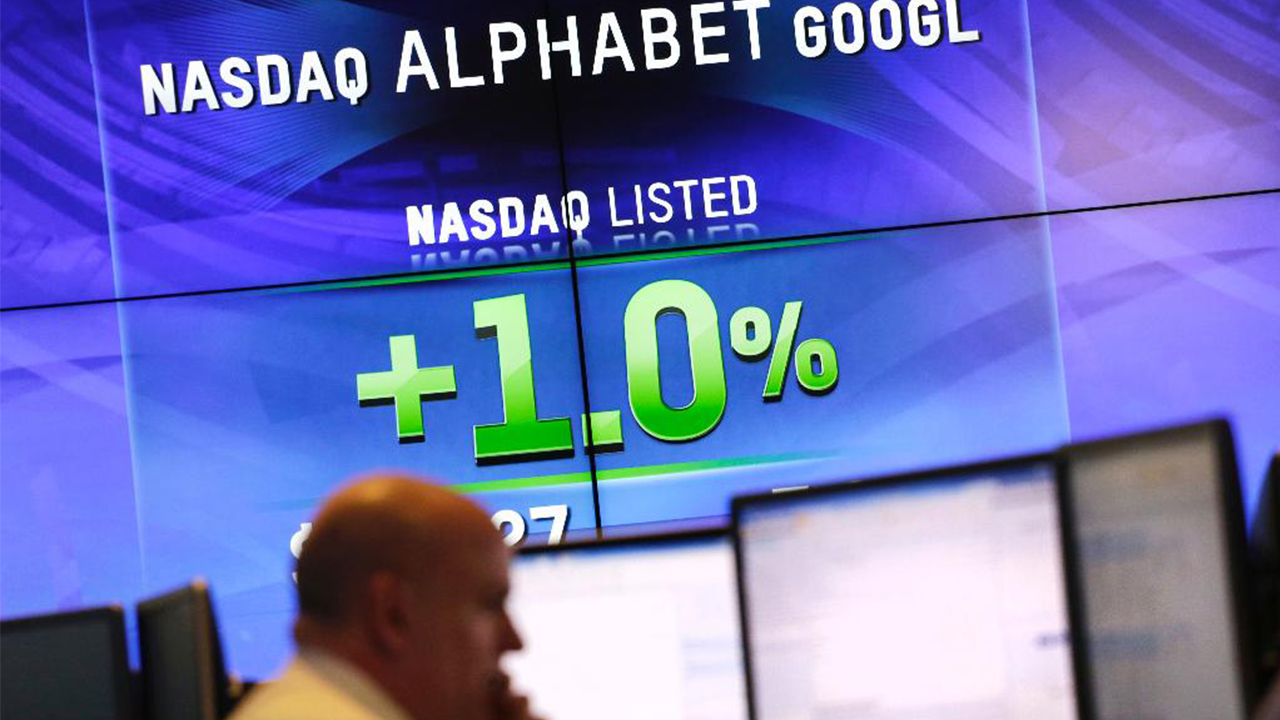
Andrew Bary breaks down Barron's list of the best stocks in 2020.
via FOX BUSINESS NEWS https://ift.tt/2SH4leq
Sunday, December 29, 2019
New top story from Time: Researcher Who Led Team That Genetically Edited Babies Sentenced to Prison in China
(BEIJING) — Three researchers involved in the births of genetically edited babies have been sentenced for practicing medicine illegally, Chinese state media said Monday.
The report by Xinhua news agency said lead researcher He Jiankui was sentenced to three years and fined 3 million yuan ($430,000).
Two other people received lesser sentences and fines. Zhang Renli was sentenced to two years in prison and fined 1 million yuan. Qin Jinzhou received an 18-month sentence, but with a two-year reprieve, and a 500,000 yuan fine.
He, the lead researcher, said 13 months ago that he had helped make the world’s first genetically edited babies, twin girls born in November 2018. The announcement sparked a global debate over the ethics of gene editing.
He also was involved in the birth of a third gene-edited baby.

New top story from Time: U.S. Airstrikes in Syria and Iraq Target Militia Blamed for American Contractor’s Death
(WASHINGTON) — The U.S. carried out military strikes in Iraq and Syria targeting an Iranian-backed Iraqi militia blamed for a rocket attack that killed an American contractor, Defense Secretary Mark Esper said Sunday.
Secretary of State Mike Pompeo said the strikes send the message that the U.S. will not tolerate actions by Iran that jeopardize American lives.
“Precision defensive strikes” were conducted against five sites of Kataeb Hezbollah, or Hezbollah Brigades, Defense Department spokesman Jonathan Hoffman said in a statement earlier Sunday.
The U.S. blames the militia for a rocket barrage Friday that killed a U.S. defense contractor at a military compound near Kirkuk, in northern Iraq. Officials said as many as 30 rockets were fired in Friday’s assault.
Esper said the U.S. hit three of the militia’s sites in western Iraq and two in eastern Syria, including weapon depots and the militia’s command and control bases.
U.S. Air Force F-15 Strike Eagles carried out the strikes and all the aircraft safely returned to their home base, Esper said. At the ammunition storage facilities that were struck, significant secondary explosions were observed.
Pompeo, Esper and Gen. Mark Milley, chairman of the Joint Chiefs of Staff, flew to Palm Beach, Florida, after the operation to brief President Donald Trump.
Esper said they discussed with Trump “other options that are available” to respond to Iran.
“I would note also that we will take additional actions as necessary to ensure that we act in our own self-defense and we deter further bad behavior from militia groups or from Iran,” Esper, who was accompanied by Pompeo and Milley, said in a brief statement to reporters in a ballroom at Trump’s Mar-a-Lago resort, where the president is on a more than two-week winter break.
The national security officials did not answer any questions.
Pompeo said the “decisive response” makes clear that the U.S. ”will not stand for the Islamic Republic of Iran to take actions that put American men and women in jeopardy.”
Trump was at Mar-a-Lago but did not appear with his top national security officials. After Pompeo and Esper spoke, the president traveled to his private golf club in West Palm Beach. The White House did not immediately say why Trump returned to the club after spending nearly six hours there earlier Sunday.
Iraq’s Joint Operations Command said in a statement that three U.S. airstrikes on Sunday evening Iraq time hit the headquarters of the Hezbollah Brigades at the Iraq-Syria border, killing four fighters.
Iraq’s Hezbollah Brigades, a separate force from the Lebanese group Hezbollah, operate under the umbrella of the state-sanctioned militias known collectively as the Popular Mobilization Forces. Many of them are supported by Iran.
The Popular Mobilization Forces said Sunday that the U.S. strikes killed at least 19 of Kataeb Hezbollah’s members.
Kataeb Hezbollah is led by Abu Mahdi al-Muhandis, one of Iraq’s most powerful men. He once battled U.S. troops and is now the deputy head of the Popular Mobilization Forces.
In 2009, the State Department linked him to the elite Quds Force of Iran’s Revolutionary Guard, designated a foreign terrorist organization by President Donald Trump earlier this year.
The U.S. maintains some 5,000 troops in Iraq. They are there based on an invitation by the Iraqi government to assist and train in the fight against the Islamic State group.
The militia strike and U.S. counter-strike come as months of political turmoil roil Iraq. About 500 people have died in anti-government protests in recent months, most of them demonstrators killed by Iraqi security forces.
The mass uprisings prompted the resignation of Prime Minister Adel Abdul-Mahdi late last month. Abdul-Mahdi remains for now in a caretaker capacity.
Abdul-Mahdi had made no public comment on Friday’s militia attack but condemned the U.S. retaliatory strike on Sunday. He called it a violation of Iraqi sovereignty and a “dangerous escalation that threatens the security of Iraq and the region.”
In a statement, Abdul-Mahdi said Defense Secretary Mark Esper had called him about a half-hour before the U.S. strikes to tell him of U.S. intentions to hit bases of the militia suspected of being behind Friday’s rocket attack. Abdul-Mahdi said in the statement he asked Esper to call off U.S. retaliation plans.
The statement said Iraqi President Barham Salih also received advance notice from a U.S. diplomat, and also asked unsuccessfully for Americans to call off it off.
___
Associated Press writers Darlene Superville in Palm Beach, Fla., and Zeina Karam in Beirut, Lebanon, contributed to this report.

FOX BIZ NEWS: New York doctor sues Apple over watch's heart monitoring technology
New York doctor sues Apple over watch's heart monitoring technology
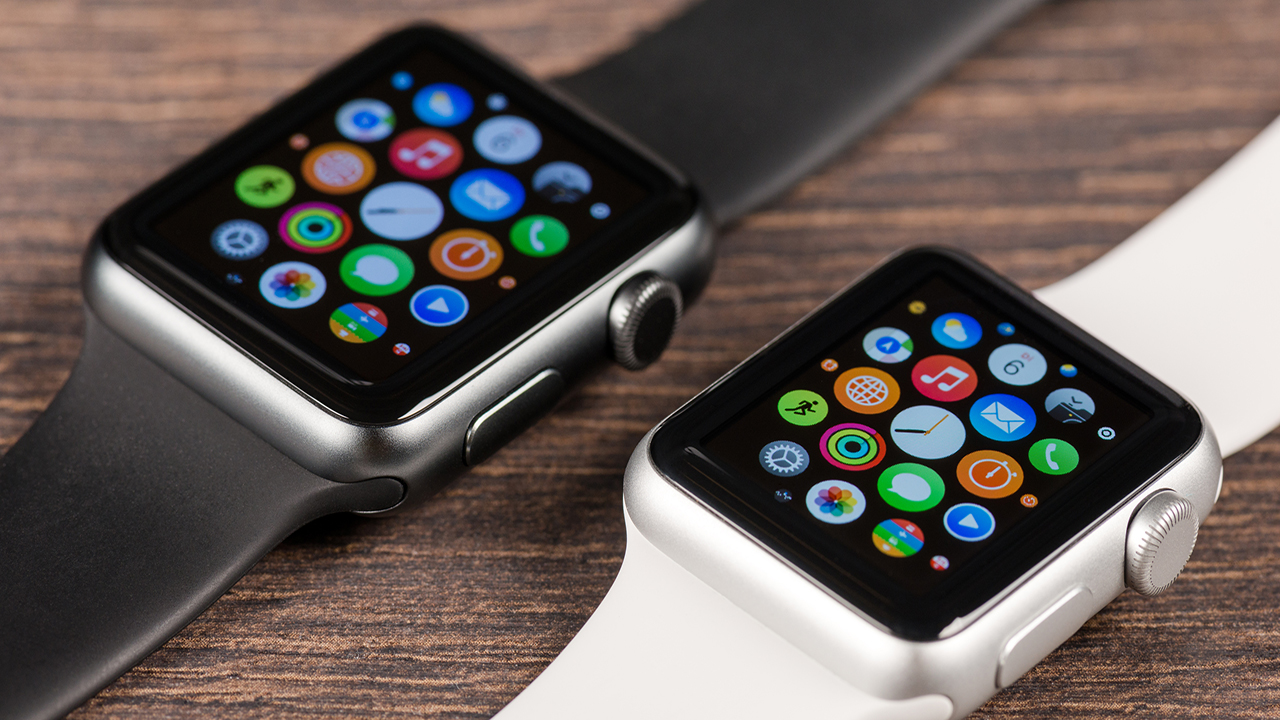
The doctor is accusing Apple of incorporating features of his patented technology on the Apple Watch's heart-monitoring app.
via FOX BUSINESS NEWS https://ift.tt/2MEGYOS
সংসদ নির্বাচন ২০১৮: যেভাবে হয়েছিল ৩০শে ডিসেম্বরের নির্বাচন
২০১৮ সালের ৩০শে ডিসেম্বর অনুষ্ঠিত জাতীয় সংসদ নির্বাচন ছিল সব দলের অংশগ্রহণে একটি নির্বাচন। কিন্তু ভোটের আগে-পরে নানা অভিযোগ ওঠে। কী হয়েছিল সেদিন?
from BBC News বাংলা - খবর, সর্বশেষ খবর, ব্রেকিং নিউজ, বিশ্লেষণ https://ift.tt/2MF3S8F
via IFTTT
from BBC News বাংলা - খবর, সর্বশেষ খবর, ব্রেকিং নিউজ, বিশ্লেষণ https://ift.tt/2MF3S8F
via IFTTT
পাকিস্তানে হিজড়া: মায়া নামে যে নারী পালিয়েও বাঁচতে পারেননি
পাকিস্তানে সমাজ অনেক রক্ষণশীল এবং ভিন্ন মানুষদের জন্য সহনশীলতা খুব কম। মায়া সেই রক্ষণশীলতা মেনে চলেননি। তিনি হিজড়া ছিলেন, অর্থাৎ তিনি পুরুষ হয়ে জন্মগ্রহণ করলেও তিনি নারী হিসাবে নিজের পরিচয় দেন এবং নারীদের মতো জীবনযাপন করেন।
from BBC News বাংলা - খবর, সর্বশেষ খবর, ব্রেকিং নিউজ, বিশ্লেষণ https://ift.tt/359Iuiu
via IFTTT
from BBC News বাংলা - খবর, সর্বশেষ খবর, ব্রেকিং নিউজ, বিশ্লেষণ https://ift.tt/359Iuiu
via IFTTT


ডাক্তারদের 'ভূতবিদ্যা' শেখাচ্ছে যে বিশ্ববিদ্যালয়
বানারাস হিন্দু ইউনিভার্সিটিতে বলছে, যেসব রোগীরা দাবি করে যে তারা ভূত দেখেছে বা যাদের ভূতে ধরেছে তাদেরকে কীভাবে চিকিৎসা সেবা দেয়া যায়, ডাক্তারদের সেটাই শেখানো হবে এই কোর্সে।
from BBC News বাংলা - খবর, সর্বশেষ খবর, ব্রেকিং নিউজ, বিশ্লেষণ https://ift.tt/2u0YV3D
via IFTTT
from BBC News বাংলা - খবর, সর্বশেষ খবর, ব্রেকিং নিউজ, বিশ্লেষণ https://ift.tt/2u0YV3D
via IFTTT
New top story from Time: Plane Crashes into Home in Maryland Suburbs, Killing the Pilot
(LANHAM, Md.) — A small plane crashed in the Maryland suburbs of the nation’s capital Sunday, hitting a home’s carport and killing the lone person aboard the aircraft, authorities said.
The plane came down in the neighborhood of Lanham shortly before 3 p.m., striking the carport before it broke into many pieces on the ground, said Mark Brady, a spokesman for Prince George’s County fire and emergency services.
The plane and the carport caught fire, but the flames have been extinguished, he said.
Brady said there were no reports of injuries on the ground. It wasn’t immediately clear if someone was in the house at the time. The carport was attached to the house, Brady said. The identity of the person killed wasn’t immediately known.
The National Transportation Safety Board was expected to take over the investigation, according to Brady.
The home is near an intersection about 2 miles (3 kilometers) from an airport in College Park, Maryland. Lanham is in the northeastern section of suburbs near Washington, D.C..

New top story from Time: Sue Lyon, Who Played Lolita in Kubrick Film at 14, Dies at Age 73
(NEW YORK) — Sue Lyon, who at age 14 played the title character in director Stanley Kubrick’s 1962 film “Lolita,” has died.
Lyon’s longtime friend Phil Syracopoulos told The New York Times she had been in declining health for some time, and died Thursday in Los Angeles. No further details on her death were provided. She was 73.
Lyon was reportedly chosen from some 800 girls who sought the role of “Lolita” for the film based on Vladimir Nabokov’s 1955 novel about a middle-aged literature professor’s sexual obsession with a 12-year-old girl.
Nabokov also wrote the screenplay for Kubrick’s adaptation, whose cast included movie luminaries James Mason, Peter Sellers and Shelley Winters.
A close-up of her face wearing heart-shaped sunglasses with a lollipop at her lips was used as the movie’s poster and became its lasting iconic image, despite neither the glasses nor the sucker appearing in the film, which eliminated the book’s more graphic sexual depictions and played up its comic aspects.
For Lyon, it was her first film. She had taken a pair of tiny TV roles before it, and would act for nearly 20 years after it, but would never be known for anything nearly as much as for “Lolita.”
Born the youngest of five children in Davenport, Iowa, in 1946, Lyon’s father died before she was one year old. Her mother soon after moved the family to Dallas, then a few years later took her children to Los Angeles, where Lyon took up acting.
She got roles in 1959 on “The Loretta Young Show,” where Kubrick noticed her, and in 1960 on “Dennis the Menace.”
Her post-“Lolita” credits included 1964’s “Night of the Iguana” and 1971’s “Tony Rome.” Her final acting job was in the 1980 horror film “Alligator.”

Subscribe to:
Posts (Atom)