Coronavirus forces Fed to extend ban on bank stock buybacks, dividends
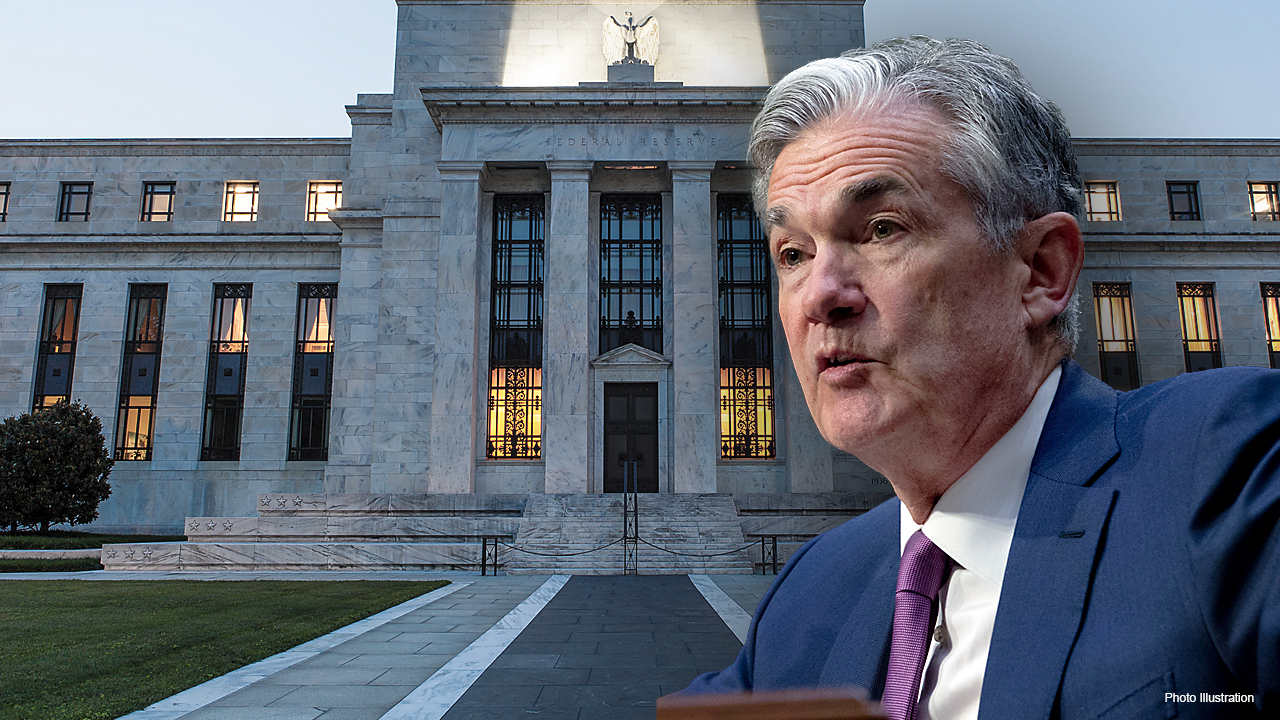
The Fed is keeping a lid on bank dividend hikes and stock buybacks.
via FOX BUSINESS NEWS https://ift.tt/3kYz5T6

As Tuesday’s chaotic Presidential debate shifted to a discussion about the U.S. economy, President Donald Trump and former Vice President Joe Biden seemed, yet again, to be operating in different stratospheres. As Trump boasted—without corroborating evidence—that “our country is coming back incredibly well” from the economic shutdown precipitated by the coronavirus pandemic, Biden countered that the recovery hasn’t been so simple.
Though some measures indicate revival, he argued, the growth has primarily been concentrated in the stock market, where gains are made by people who have funds to invest. “Millionaires and billionaires like him in the middle of the COVID crisis have done very well,” Biden said. “But you folks at home, you folks living in Scranton and Claymont and all the small towns and working class towns in America, how well are you doing?”
This exchange was largely drowned out by other arguments in the turbulent conversation. But Biden’s rhetoric hit on a theme that economists have been warning about for months: that America’s economic recovery from the coronavirus pandemic has been “K-shaped,” or mainly benefitting the affluent. American billionaires saw their wealth skyrocket by $282 billion between mid-March and mid-April, according to an analysis by the Institute for Policy Studies. Interest rates are down, allowing people who own their homes to refinance their mortgages. Those with jobs that provide 401Ks have seen their account balances rise to near pre-pandemic levels. Even pandemic-fueled price changes have tended to reduce the prices of goods and services that mostly benefit people who have money to burn; new cars, travel, and food delivery services have gotten cheaper.
Then there’s what’s happening to millions of less fortunate Americans. During the same March to April time period that saw billionaires’ gains spike, more than 22 million Americans lost their jobs. Those numbers have recovered somewhat, but the unemployment rate was still 8.4% in August—more than double the 3.5% before the pandemic hit. Eight million more people are unemployed today than were jobless in February. The same price shifts that made luxuries like food delivery cheaper have caused the inexpensive grocery store items that poor households rely on to become pricier.
The pain shows little sign of abating for this unlucky group; in many ways, it’s just getting worse. This week alone, Disney laid off 28,000 workers, and hundreds of thousands of airline workers could face a similar fate if Washington does not renew a federal assistance program that has been keeping the embattled industry afloat. Congress is still struggling to come to an agreement on the next coronavirus relief deal, even as several of the key programs serving as an economic lifeline have expired. One of the food assistance programs that was quickly rolled out to help children hit by the coronavirus-induced economic crisis is slated to end in several states this week. Evictions, which have been temporarily paused for most people who have been financially affected by the virus, will kick off again in the dead of winter.
This inequitable economic recovery can partially be blamed on Congressional inaction. Rare bipartisan camaraderie behind emergency relief efforts ended soon after Congress overwhelmingly passed a $2.2 trillion relief package in March. House Democrats subsequently passed a $3 trillion package in May, which would have extended many of these programs, but Senate Majority Leader Mitch McConnell refused to vote on it, dismissing it as a “liberal wish list.”
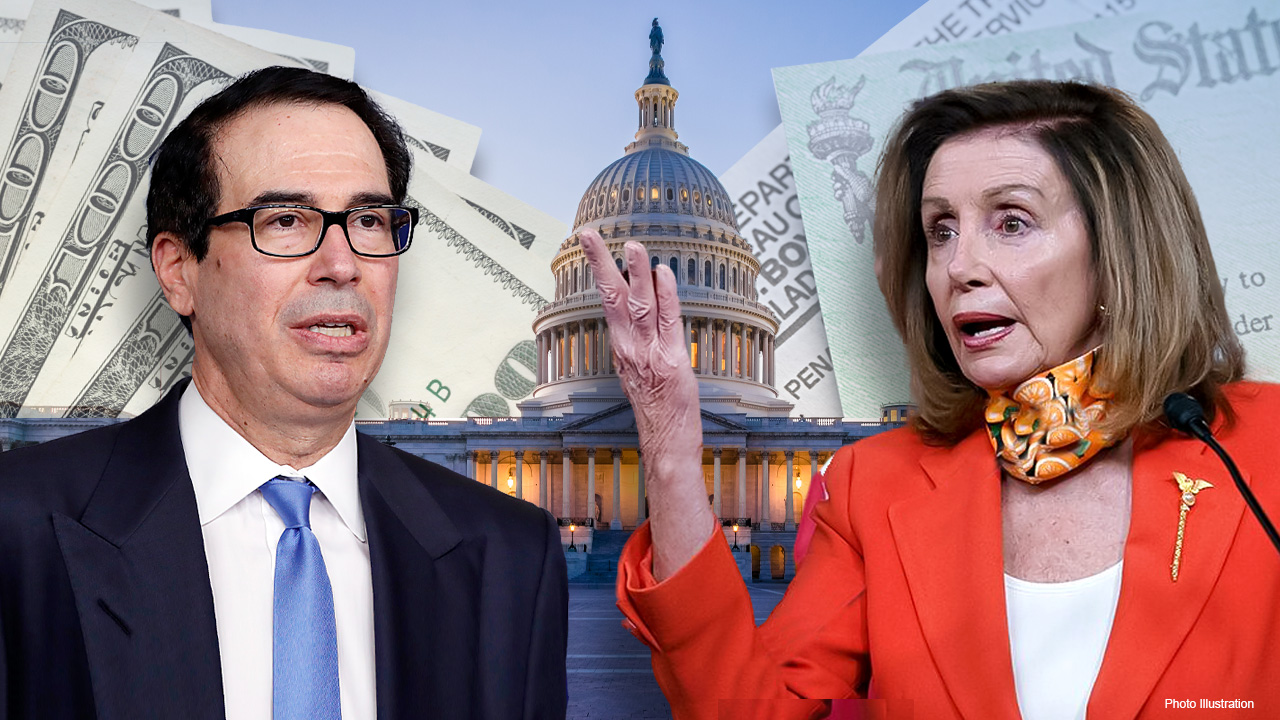
The White House began negotiating with Democrats in July, but have been unable to reach an agreement on another round of relief since. As frustration has mounted within the Democratic caucus and the pandemic continued to rage across the country, Democratic leadership unveiled a pared down proposal and House Speaker Nancy Pelosi continues to confer with Treasury Secretary Steven Mnuchin. But there is no guarantee an agreement that pleases all parties involved will come to fruition this time, either. Mnuchin said Wednesday evening that the total cost was still too high. House Democrats had expected to vote on the bill Wednesday evening, but postponed a vote until Thursday to allow more room for further discussion, according to a Democratic aide. And any bill will need support from at least thirteen Republican Senators and the White House’s approval to actually become law.
As negotiations lurched along this summer, programs that provided critical assistance have vanished, with more expiration dates on the way. The Payroll Support Program, which has been providing airlines with financial assistance to keep workers on payroll, ends October 1. Airline executives have been warning for weeks that if no deal appears likely, hundreds of thousands of workers—which includes baggage handlers who earn a median income of $28,000 per year—will be furloughed. Two months ago, the Federal Pandemic Unemployment Compensation program stopped sending a weekly allotment of $600 to supplement state unemployment benefits. And the Paycheck Protection Program, which administered millions of potentially forgivable loans to small businesses, closed on August 8.
Lobbyists on both sides of the aisle, particularly those advocating for industries hit hardest in the pandemic, are astounded their calls for help have fallen on mostly deaf ears. “Congressional inaction is occurring when restaurants are literally at the weakest point they’ve been in six months,” says Sean Kennedy, executive Vice President at the National Restaurant Association. With the weather getting colder in much of the country, he argued, restaurants need extra reinforcements at the federal level that will enable them to stay open and adhere to safety standards, or otherwise risk permanent closure. “It’s amazing that restaurants suffering this much can’t galvanize or secure relief when every time a member of Congress goes home to their district they’re shocked to learn another restaurant [or] favorite hangout has closed their doors for good.”
Michele Evermore, a senior policy analyst at the National Employment Law project, thinks the inability to reach an agreement in Washington stems partially from the fact that the recovery has disproportionately benefited the wealthiest Americans—including those who serve in Congress and the people in their social circles. “I think people see numbers improving and they actually don’t know anybody who’s struggling,” Evermore says. “The kind of people who serve in Congress don’t tend to have a lot of broke friends.”
Time is also running out on pandemic relief benefits that have kept children in low-income families from going hungry. Pandemic-EBT is a Department of Agriculture program that launched when schools closed to support to families whose children would normally qualify for free and reduced-price school meals by loading funds onto a prepaid card otherwise used for food stamp benefits. It ends September 30, despite the fact somewhere around half of the nation’s public school students are still fully remote. (A few states have recently been authorized to continue the program on a more limited basis.) The Summer Food Service Program, also funded by the USDA, enabled kids in families of all income brackets to obtain free meals distributed by schools throughout their closures. It will lose funding in January.
Health care practitioners have already been seeing the impact of families’ scrambling to make ends meet on children’s health. “What I see every single day from the pandemic is really amazingly increased numbers of severely underweight children coming to our clinic, and parents really panicked about how they are going to find enough food,” Dr. Megan Sandel, co-director of the Grow Clinic for Children at Boston Medical Center and a lead investigator of Children’s HealthWatch, said on a recent press call.
Housing experts also fear what is to come in January, when a Centers for Disease Control and Prevention eviction moratorium ends. At that point, renters who have so far avoided evictions because of eviction protections will owe months’ worth of back-rent, in addition to any late fees their leases stipulated. It is not yet known how many people may suddenly lose their homes during one of the coldest months of the year—but unless some form of rent relief or direct payment is passed, the figure will surely be staggering.
With all of this unraveling under his watch, Trump still claimed during Tuesday’s debate that he had built the “greatest economy in history” before the pandemic struck. If only examining the gains made by people who share Trump’s billionaire status, that might be right. But even before COVID-19 sent the economy into a tailspin, many low-income Americans probably would have disagreed. In 2018, nearly 40% of Americans couldn’t cover an unplanned $400 expense without going into debt, carrying a balance on their credit card, or borrowing the funds, according to a report from the Federal Reserve. Around the same time, three men in the U.S. collectively held more wealth than the poorest half of Americans, according to an Institute for Policy Studies report.
For some, the looming loss of housing and food protections—in addition to the lack of a second stimulus check and the standstill in Congress over extending protections for payroll relief—is only going to make things harder. Worse, says Evermore, is that few in power seem to care. “Goodwill toward people who lost work through no fault of their own has dissipated faster during this recession,” she says, “than at any time in history.”


YEREVAN, Armenia — Leaders of Azerbaijan and Armenia brushed off the suggestion of peace talks Tuesday, accusing each other of obstructing negotiations over the separatist territory of Nagorno-Karabakh, with dozens killed and injured in three days of heavy fighting.
In the latest incident, Armenia said one of its warplanes was shot down by a fighter jet from Azerbaijan’s ally Turkey, killing the pilot, in what would be a major escalation of the violence. Both Turkey and Azerbaijan denied it.
The international community is calling for talks to end the decades-old conflict between the two former Soviet republics in the Caucasus Mountains region following a flareup of violence this week. It centers on Nagorno-Karabakh, a region that lies within Azerbaijan but has been under the control of ethnic Armenian forces backed by the Armenian government since 1994 at the end of a separatist war.
The U.N. Security Council called on Armenia and Azerbaijan Tuesday evening to immediately halt the fighting and urgently resume talks without preconditions. The U.N.’s most powerful body strongly condemned the use of force and backed Secretary-General Antonio Guterres’ earlier call to stop the fighting, deescalate tensions, and resume talks “without delay.”
Azerbaijani President Ilkham Aliyev told Russian state TV channel Rossia 1 that Baku is committed to negotiating a resolution but that Armenia is obstructing the process.
“The Armenian prime minister publicly declares that Karabakh is (part of) Armenia, period. In this case, what kind of negotiating process can we talk about?” Aliev said. He added that according to principles brokered by the Minsk group, which was set up in 1992 by the Organization for Security and Cooperation in Europe to resolve the conflict, “territories around the former Nagorno-Karabakh autonomous region should be transferred to Azerbaijan.”
Aliev noted that if Armenian Prime Minister Nikol Pashinyan says “that Karabakh is Armenia and that we should negotiate with the so-called puppet regime of Nagorno-Karabakh, (he is) trying to break the format of negotiations that has existed for 20 years.”
Pashinyan, in turn, told the broadcaster that “it is very hard to talk about negotiations … when specific military operations are underway.” He said there is no military solution to the conflict and called for a compromise.
But first, Azerbaijan must “immediately end (its) aggression towards Nagorno-Karabakh and Armenia,” Pashinyan said. “We all perceive this as an existential threat to our nation, we basically perceive it as a war that was declared to the Armenian people, and our people are now simply forced to use the right for self-defense.”
Since Sunday, the Nagorno-Karabakh Defense Ministry reported 84 servicemen were killed. Aliyev said 11 civilians were killed on its side, although he didn’t detail the country’s military casualties.
Both countries accused each other of firing into their territory outside of the Nagorno-Karabakh area on Tuesday.
The separatist region of about 4,400 square kilometers (1,700 square miles), or about the size of the U.S. state of Delaware, is 50 kilometers (30 miles) from the Armenian border. Soldiers backed by Armenia also occupy some Azerbaijani territory outside the region.
Armenia also alleged that Turkey, which supports Azerbaijan, was involved. “Turkey, according to our information, looks for an excuse for a broader involvement in this conflict,” Pashinyan said.
The Armenian military said an SU-25 from its air force was shot down in Armenian airspace by a Turkish F-16 fighter jet that took off from Azerbaijan, and the pilot was killed.
The allegation of downing the jet was “absolutely untrue,” said Fahrettin Altun, communications director for Turkey’s president. Azerbaijani officials called it “another fantasy of the Armenian military propaganda machine.”
Turkish President Recep Tayyip Erdogan urged Armenia to withdraw immediately from the separatist region, and Turkish Foreign Minister Mevlut Cavusoglu said Turkey is “by Azerbaijan’s side on the field and at the (negotiating) table.”
Armenian officials said that Turkey, a NATO member, is supplying Azerbaijan with fighters from Syria and weapons, including F-16 fighter jets. Both Azerbaijan and Turkey deny it.
Earlier in the day, Azerbaijan’s Defense Ministry said Armenian forces shelled the Dashkesan region in Azerbaijan. Armenian officials said Azerbaijani forces opened fire on a military unit in the Armenian town of Vardenis, setting a bus on fire and killing one civilian.
Armenia’s Foreign Ministry denied shelling the region and said the reports were laying the groundwork for Azerbaijan “expanding the geography of hostilities, including the aggression against the Republic of Armenia.”
German Chancellor Angela Merkel has pushed for “an immediate cease-fire and a return to the negotiating table” in phone calls with the leaders of both countries, her office said.
She told them the OSCE offers an appropriate forum for talks and that the two countries’ neighbors “should contribute to the peaceful solution,” said her spokesman, Steffen Seibert.
U.S. Secretary of State Mike Pompeo said during a visit to Greece that “both sides must stop the violence” and work “to return to substantive negotiations as quickly as possible.”
Russia, which along with France and the United States co-chairs the Minsk group, urged every country to help facilitate a peaceful resolution of the conflict.
“We call on all countries, especially our partners such as Turkey, to do everything to convince the opposing parties to cease fire and return to peacefully resolving the conflict by politico-diplomatic means,” Kremlin spokesman Dmitry Peskov said Tuesday.
Putin spoke to Pashinyan on Tuesday for the second time in three days, urging de-escalation and, like the other leaders, an immediate cease-fire.
—-
Associated Press writers Daria Litvinova in Moscow, Geir Moulson in Berlin, Suzan Fraser in Ankara and Elena Becatoros in Athens contributed.

President Donald Trump and former Vice President Joe Biden are facing off on the debate stage during one of the most turbulent periods in modern American history. A viral pandemic has killed 200,000 Americans and pummeled the economy, racial justice protests continue in towns and cities, and vast fires wreak environmental disaster across the American West. Adding to the national sense of foreboding, Trump has refused to commit to a peaceful transition of power if he loses the election and is using his bully pulpit to sow distrust in the voting process and spread false allegations that voting by mail—a safe alternative for many during the pandemic—will lead to rampant voter fraud. (It won’t.)
There’s a lot to debate.
While the head-to-head is an opportunity for both candidates to convince Americans that they are the right person to lead the country through this tumultuous time, it’s also a moment for voters to see the two men’s styles set side by side, in stark relief. The President is trailing Biden in national polls, but the race is close in battleground states Trump would need to win to get to 270 electoral votes.
Tonight’s debate comes on the heels of explosive revelations in the New York Times laying out long-awaited details about Trump’s personal finances that tarnish his image as a successful business mogul, including that he paid little to no federal taxes for most of the last two decades and that he has massive debts coming due soon.
Even if the debate moderator, Fox News’ Chris Wallace, doesn’t explicitly ask about the fairness of Trump’s tax avoidance, you can bet Biden will bring it up. Trump has dismissed the report as “totally fake news” and is likely to fall back on the same defenses he used in 2016: that he intends to release his financial details once they’re no longer under audit (the IRS has repeatedly said there’s nothing preventing him from doing so) and that paying less in taxes just makes him a smart businessman.
Trump will try to paint Biden as the standard bearer of an old order and make the case that only Trump can engineer an economic rebound from the pandemic. He’s repeatedly called Biden “sleepy” and led a conservative media push attacking Biden’s age (Biden is 77; Trump is 74) and implying he’s not mentally up to the job. There are few more transparent windows into mental acuity than a debate stage.
For his part, Biden all but bought a billboard across from the debate site to headline what at least part of his strategy would be. Just ahead of the candidates’ arrivals on stage at the Cleveland Clinic, Biden’s campaign released tax returns for 2019, showing an almost $300,000 tax bill on combined Joe and Jill Biden adjusted gross income of $985,233. The disclosure is now the twenty-second year of tax returns made available to the public from Biden — and a clear taunt to Trump, who is notoriously thin-skinned when it comes to questions about his claims of wealth.
But Biden’s advisers are also keenly aware that the trio of chaotic through-lines to this election have had far greater effects on voters than the extent of Trump’s tax planning. Biden is expected to have his fun casting doubts on Trump’s legitimate success and telling voters they can’t trust someone who doesn’t pay his fair share, but he’s not going to linger. After all, the debate team is very familiar with how Hillary Clinton tried to make Trump’s tax dodges an issue in 2016 and then-candidate Trump’s reply of so what? inoculate him.
More pressing? The coronavirus death toll has now topped 200,000 Americans and Biden’s team has seen that stunning reality does far more to help their chances than anything that can be said about tax loopholes.


As President, Donald Trump has cast China as a global villain: a malevolent actor that all but launched a worldwide pandemic on an unsuspecting world, robbed Americans of their jobs and stole U.S. business secrets. He has made the Chinese Communist Party a catch-all enemy that pulls puppet-like strings to make international organizations like the World Health Organization work at cross-purposes with Washington, all charges Beijing vigorously denies.
At the same time, Trump has presented himself to the world—and to U.S. voters—as the only person capable of pummeling Beijing into submission, chiefly through a landmark trade deal. Democrats, the President and his allies say, are the willing patsies who bow to Beijing, as when former Vice President-turned-Democratic presidential candidate Joe Biden sought closer ties to the growing superpower in his multiple visits there. “A rising China is a positive, positive development, not only for China but for America and the world writ large,” Biden said in 2011 after returning to the U.S. from one such trip.
It’s a black-and-white narrative that will be argued on stage Tuesday night during the first Presidential debate in Cleveland, Ohio, with each man’s record and the COVID-19 pandemic on the debate docket. China will loom large for its role as Trump’s designated fall guy for the virus that has killed more than 200,000 Americans, for its economy, which is thriving despite the pandemic, and for its military, which could surpass America’s in size and strength by 2049.
Biden heads for the debate stage buoyed by an August Fox News poll that shows more Americans trust him over Trump to handle China. He is sure to point out Trump’s swings between painting China as an existential threat to the U.S. and effusive praise for Chinese leader Xi Jinping.
But many Trump supporters, if not most Americans, have become accustomed to Trump’s praise of strongmen in public, which in this case has given way to a barrage of insults, slamming Xi for letting the “Wuhan virus” spread. And Trump’s arguments that the Obama Administration was fooled by China could be persuasive on live television, says Michael Green, an Asia specialist from the Center for Strategic and International Studies. “The Trump Administration’s line,” says Green, a former Bush official who has backed Biden, “is that everybody was duped by China.” Green says that is “ridiculous and wrong…but it’s a pretty easy line to use in a debate.”
It will be tricky for Biden to counter these charges in clear terms to the American people. During his early years as Vice President, Washington and key allies like the U.K. were still hopeful of working with China, guardedly optimistic that Chinese Communist Party leaders could be carrot-pulled into more free-market, human-rights and democracy-oriented behavior.
The last year has seen China double down in a different direction. Its crackdown on Hong Kong demonstrators culminated in enacting a National Security Law on the region, decades ahead of the city’s agreed return to Chinese rule, and it has continued its crackdown on Muslim Uighurs, with hundreds of thousands reportedly sent to re-education camps.
The Trump Administration has accused Chinese leaders of being slow to tell the world how easily COVID-19 was spreading from person to person, and slow to admit a WHO team trying to investigate the outbreak. The Administration criticized China for releasing a DNA map of the virus without also sharing actual physical samples, which could help determine whether it jumped from animals or originated in a Chinese weapons lab, a popular but unsubstantiated theory among some in the GOP that is ridiculed by Chinese officials.
The Trump Administration has pursued a go-it-alone policy of using economic pain to bring Beijing to the negotiating table, aiming to check unfair trading practices and China’s aggressive militarization in the South China Sea. The Administration has slapped hundreds of billions of tariffs on Chinese goods, and imposed sanctions against alleged Chinese hackers accused of stealing U.S. intellectual property. The U.S. has also sanctioned Chinese officials who have cracked down on Hong Kong and the country’s Muslim Uighur minority.
The tough talk led to the January signing of the first phase of a trade deal, which keeps U.S. tariffs on Chinese goods largely intact, with the threat of more if China doesn’t follow through, and requires Beijing to buy upwards of $200 million in U.S. goods and services over the next two years. As of August, China has only bought $56.1 billion in U.S. goods, according to the Peterson Institute for International Economics, and with Trump skewering Beijing verbally at every opportunity, doesn’t appear to be working to step up spending.
Meanwhile, China’s global exports rose this summer, mainly because of its dominance of personal protective equipment manufacturing and work-from-home technology, according to the Council on Foreign Relations, while the U.S. trade deficit with China has grown. The U.S.-China trade war had already cost 300,000 jobs since it started in early 2018, according to Moody Analytics, even before the coronavirus wreaked havoc on the U.S. job market.
Biden’s own approach to China, as outlined in his public comments so far, sounds like a Trump-lite trade policy with a side of wishful thinking that Beijing can still be coaxed back to better behavior by a concerted scolding by Washington and its allies. He told the Council on Foreign Relations he would double down on Trump’s sanctions over the Hong Kong security law and its detention of up to a million minority Uighurs, but he told NPR that he would lift tariffs on Chinese imports and work through international trade bodies like the WTO to bring Beijing to heel.
Biden claims a key tool to counter China would be to super-charge those measures in cooperation with allies, in part by renegotiating the Trump-abandoned Trans-Pacific Partnership (TPP) trade deal, an acronym that by itself can cause eyes to glaze, to band Pacific economies against Beijing. As Biden wrote in Foreign Affairs, “The most effective way to meet that challenge is to build a united front of U.S. allies and partners to confront China’s abusive behaviors and human rights violations, even as we seek to cooperate with Beijing on issues where our interests converge.”
Explaining that on stage on Tuesday would be a wonky turn likely lost on any popular audience, who may not remember that it was combined allied economic action against Iran that brought it to the negotiating table for the Iran nuclear deal, an argument that would draw scorn from most Republicans.
Trump, for his part, will likely argue that if a tougher tack had been taken sooner, it might have clipped Beijing’s wings—though some current and former U.S. military and intelligence officers will tell you China was always heading this way, citing hawkish books like The Hundred-Year Marathon, which relies on Chinese documents and defectors to claim, controversially, that China intends to replace the U.S. as a global superpower by 2049.
Trump has already previewed a debate attack to come on Biden’s son Hunter, who Trump has claimed made more than a billion dollars in an investment deal with the Bank of China, less than two weeks after flying there on his father’s plane in 2013, a charge that multiple fact-checks have found false. Hunter Biden’s spokesperson George Mesires tells TIME that he has “never made any money” from BHR Partners, the company he founded that struck the deal, “either from his former role as a director, or on account of his equity investment, which he is actively seeking to divest.”
When Biden served as Vice President, he helped launch Obama’s 2009 “U.S.-China Strategic and Economic Dialogue.” At the time, it seemed that Washington and Beijing could work together toward common good in the service of mutual interests. Those early efforts arguably produced tangible results, as when both countries signed up to the Paris Climate Agreement in 2016, together representing 40% of the world’s greenhouse gas emissions. “We are moving the world significantly towards the goal we have set,” Obama said of the nations’ cooperation. China also “tightened its controls on weapons sold to Iran” in response to U.S. pressure, according to a Brookings Institution review, and the countries worked together to keep North Korea in check.
“There was very broad bipartisan support for a strategy towards China… that mixed engagement with China, and counterbalancing China by keeping our defenses strong, pushing on human rights, and especially working with allies, like Japan, and Australia,” says Green, the former Bush NSC official.
The mood soured, however, by the second Obama/Biden term, with the Obama Administration decrying thousands of cyberattacks a day on the U.S. government by Chinese military hackers, and later arresting a Chinese national for the theft of millions of government employees’ personal records from the Office of Personnel Management by a secretive Chinese military hacking unit, leading to a bilateral anti-hacking pact that the Trump Administration later accused the Chinese of violating.
Obama and Biden also negotiated the TPP—which Trump swiftly pulled out of after his inauguration in 2017—to gather together 12 regional Pacific economies, representing 40% of the world’s trade, into a single trading market to offset China’s economic bullying. And Obama’s military challenged China’s construction of an artificial island and military base in the South China Sea with its own “presence patrols” of U.S. Naval vessels steaming through sea channels in international waters that China was trying to claim for its own.
All of the Obama Administration’s efforts were eventually swallowed up and erased, like the wakes of those U.S. Naval ships, in part by Trump’s TPP departure, but mostly by the steady waves of a strategically planned and clinically executed Chinese campaign to widen its economic influence, build its military might, and become a diplomatic superpower that cannot be ignored on any major international issue.
The U.S. public hasn’t paid much heed to China’s long-game, but the COVID-19 crisis has caused more Americans to see China negatively, according to a Pew Research Service poll released in July. It’s against that backdrop that Biden will have to explain to information-overwhelmed American viewers why he once entertained the notion that China’s Communist Party could be reasoned with, and how his policies would produce a different result than the steadily increasing cold war between Beijing and Washington.
China-focused political economist Derek Scissors, of the right-leaning American Enterprise Institute, believes both candidates are weak on China. He says the first phase of the President’s trade deal is a “failure,” with U.S. exports to China “far behind schedule,” U.S. portfolio investment in China soaring, Beijing’s hack-and-grab theft of U.S. intellectual property continuing, and Trump’s sanctions having little effect on Chinese tech companies’ predatory behavior.
On the other hand, Biden’s China record is one of “wishful thinking,” Scissors says, mostly focused on global climate change initiatives. “The Obama Administration was paralyzed by hope for meaningful Chinese cooperation, instead getting an increasingly nasty dictatorship,” he says. “Biden’s move away from that approach is unconvincing so far.”
Retired Amb. Joseph DeTrani, former CIA director of East Asia Operations, says both candidates behaved appropriately for the China they faced at the time. In Biden’s engagement with China as a Senator during the 1980s and 1990s “bilateral relations were solid,” he says, so cooperative moves like championing Beijing’s entry into the World Trade Organization were appropriate. When tensions later rose, the Obama Administration announced its “pivot” to East Asia, concerned about China’s behavior in the South and East China Seas and its ambitious Belt and Road Initiative, which ostensibly aimed to improve China’s physical access to markets by building roads, bridges and ports globally, but instead often trapped countries in debt-ridden deals that forced them to forfeit ownership of the projects to the Chinese.
DeTrani says Trump can argue that he, rather than his predecessors, acted against Beijing’s predatory trade practices, including “a very unfavorable historical trade imbalance with China, something previous administrations ignored.” He points out that Trump’s position hardened when it became clear China hadn’t shared data on the pandemic “in a timely way,” and with its crackdown on Hong Kong, the proliferation of Uighur reeducation camps and other human rights abuses.
With China’s military growing, already outpacing the U.S. Navy, and its still-expanding economy keeping it on track to eclipse U.S. power in the next decade, according to the Australia-based Lowy Institute, the next U.S. president will be facing a formidable adversary that no recent American leader has managed to check.


