
By BY CHRISTINA MORALES from NYT U.S. https://ift.tt/3w0S3h6
via IFTTT

SEOUL, South Korea — North Korean leader Kim Jong Un berated top officials for failures in coronavirus prevention that caused a “great crisis,” using strong language that raised the specter of a mass outbreak in a country that would be scarcely able to handle it.
The state media report Wednesday did not specify what “crucial” lapse had prompted Kim to call the Politburo meeting of the ruling Workers’ Party, but experts said the North could be wrestling with a significant setback in its pandemic fight.
So far, North Korea has claimed to have had no coronavirus infections, despite testing thousands of people and sharing a porous border with China. Experts widely doubt the claim and are concerned about any potential outbreak, given the country’s poor health infrastructure.
[time-brightcove not-tgx=”true”]
At the Politburo meeting, Kim criticized the senior officials for supposed incompetence, irresponsibility and passiveness in planning and executing anti-virus measures amid the lengthening pandemic, the North’s official Korean Central News Agency said.
Kim said “senior officials in charge of important state affairs neglected the implementation of the important decisions of the party on taking organizational, institutional, material, scientific and technological measures as required by the prolonged state emergency epidemic prevention campaign,” according to the KCNA. This “caused a crucial case of creating a great crisis in ensuring the security of the state and safety of the people and entailed grave consequences.”
The report also said the party recalled an unspecified member of the Politburo’s powerful Presidium, which consists of Kim and four other top officials.
The reference indicated Kim may replace his Cabinet Premier Kim Tok Hun, who would be held responsible for failures in the government’s anti-epidemic work, said Hong Min, a senior analyst at Seoul’s Korea Institute for National Unification.
“There is no possibility that North Korea will ever admit to an infection — even if there were mass transmissions, the North will definitely not reveal such developments and will continue to push forward an anti-virus campaign it has claimed to be the greatest,” Hong said.
“But it’s also clear that something significant happened and it was big enough to warrant a reprimanding of senior officials. This could mean mass infections or some sort of situation where a lot of people were put at direct risk of infections.”
Cheong Seong-Chang, an analyst at South Korea’s private Sejong Institute, expressed a similar view, saying the North is potentially dealing with huge virus-related problems in border towns near China, such as Sinuiju or Hyesan. He said the Presidium member Kim Jong Un sacked could possibly be Jo Yong Won, a secretary of the Workers’ Party’s Central Committee who had been seen as a fast-rising figure in Pyongyang’s leadership circle.
South Korea’s Unification Ministry, which deals with inter-Korean affairs, said it had no immediate information to share about the North Korean report and that it wouldn’t make prejudgments about the country’s virus situation.
From the start of the pandemic, North Korea described its anti-virus efforts as a “matter of national existence,” banned tourists, jetted out diplomats and severely curtailed cross-border traffic and trade. The lockdown has further strained an economy already battered by decades of mismanagement and crippling U.S.-led sanctions over the country’s nuclear weapons program.
Kim during a political conference earlier this month called for officials to brace for prolonged COVID-19 restrictions, indicating that the country isn’t ready to open its borders anytime soon despite its economic woes.
North Korea has told the World Health Organization it has not found a single coronavirus infection after testing more than 30,000 people, including many described as having fevers or respiratory symptoms.
The North’s extended border controls come amid uncertainties over the country’s vaccination prospects. COVAX, the U.N.-backed program to ship COVID-19 vaccines worldwide, said in February that the North could receive 1.9 million doses in the first half of the year, but the plans have been delayed due to global shortages.


MADRID — Almost 5,000 people are in quarantine after vacationing high school students triggered a major COVID-19 outbreak on the Mediterranean island of Mallorca, a senior official said Monday.
Authorities have confirmed almost 1,200 positive cases from the outbreak, Spain’s emergency health response coordinator, Fernando Simón said.
The partying teens celebrating the end of their university entrance exams last week created a “perfect breeding ground” for the virus as they mixed with others from around Spain and abroad, Simón told a news conference.
Mallorca health authorities carried out mass testing on hundreds of students after the outbreak became clear. It is believed to have spread as hundreds of partying students gathered at a concert and street parties.
Officials have so far traced 5,126 travelers to Mallorca. More than 900 COVID-19 cases in eight regions across mainland Spain have been traced back to the outbreak.
Scores of infected teens are still on the island. Some are being kept in their hotel rooms, while others have been moved to a hotel being used by local authorities for isolation of those with mild symptoms or suspected cases.
Simón noted that the parents of the teens are probably around 45 and 55 years old, and not all of that age group has received both doses of a COVID-19 vaccine, which could lead to community transmission.


Nurse Delta Santiago (not her real name) has reached the top of her field. She works at one of the Philippines’ top hospitals, frequented by billionaires and celebrities. But the 32-year-old can’t wait to leave. Santiago makes just $520 a month working 12-hour days and she’s desperate to land a job overseas.
Because of the pandemic, the authorities have imposed restrictions on public transport, and Santiago’s 15-mile (24-kilometer) commute to work in the center of the capital Manila is a time-consuming ordeal. She wants to rent a room closer to her workplace, to cut down on the exhausting traveling, and to avoid the risk of bringing COVID-19 home to her family, but she can’t afford to. So, for the past eight months, she has been sleeping in a utility room at the hospital, just steps away from the plush, private medical suites where high-paying patients recline in relative comfort.
[time-brightcove not-tgx=”true”]
There, on a thin mattress spread between rolls of black garbage bags and boxes of toilet disinfectant, an exhausted Santiago crams for the professional exams that could be her ticket to the United States. She also has video calls with her eight-year-old son, whom she rarely sees in person. And she seethes with fury at the needlessness of the suffering that COVID-19 has brought to the Philippines.
“I felt rage during the second surge,” Miranda says, convinced that it could have been prevented.


The Southeast Asian country of 109 million people was already struggling to contain one of the region’s worst outbreaks of when numbers began to climb sharply upwards in March this year. Typical daily caseloads have ranged from 3,000 to 7,000 in the past three months, but have been as high as 10,000 or 11,000, and hit an official peak of 15,310 on Apr. 2—a figure that is almost certainly an undercount. Less than 5.5% of the population has been vaccinated, according to WHO figures.
What happens in the Philippines matters for the world’s efforts to contain COVID-19. Like Narendra Modi’s India or Jair Bolsonaro’s Brazil, the country is ruled by a “medical populist”—a term devised by Philippine physician and medical anthropologist Gideon Lasco, and fellow researcher Nicole Curato, to convey how public health crises are vulnerable to authoritarian figures who belittle threats, pooh-pooh scientific data and proffer improvised solutions. Under President Rodrigo Duterte, the country’s COVID-19 containment strategy remains a wild card, affecting not only the Philippines itself but the millions of workers it exports around the world, and the countries relying on Filipinos to fill vital jobs as construction workers, domestic workers, seafarers and medical personnel.
That’s why many like Santiago are in despair. “We’re back to zero again,” she says.
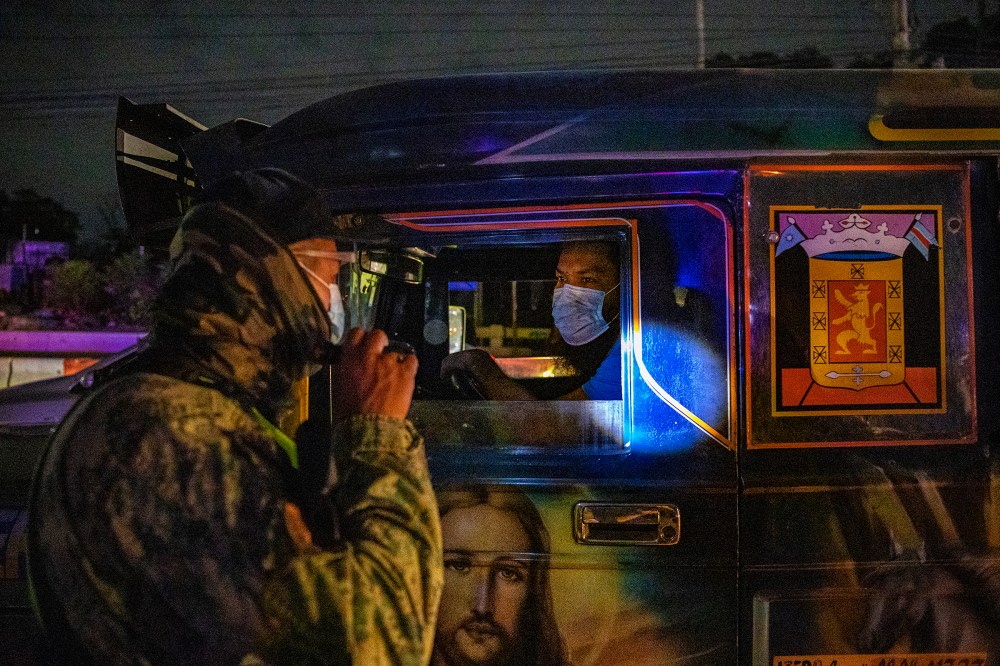
The second Philippine wave wasn’t supposed to happen because the country has been undergoing one of the world’s longest and harshest lockdowns—a draconian measure meant to keep it safe in the absence of mass testing or a widespread vaccination program. Quarantine orders of differing degrees have been rolled out across the archipelago since March 2020, enforced by armed security personnel in a manner described in April by United Nations High Commissioner for Human Rights Michelle Bachelet as “highly militarized.” Duterte himself has appeared on television telling the police and military to kill any anti-lockdown protesters who resist arrest. His bloody war on drugs had already eroded civil liberties; now, rights groups say, political freedoms have deteriorated further.
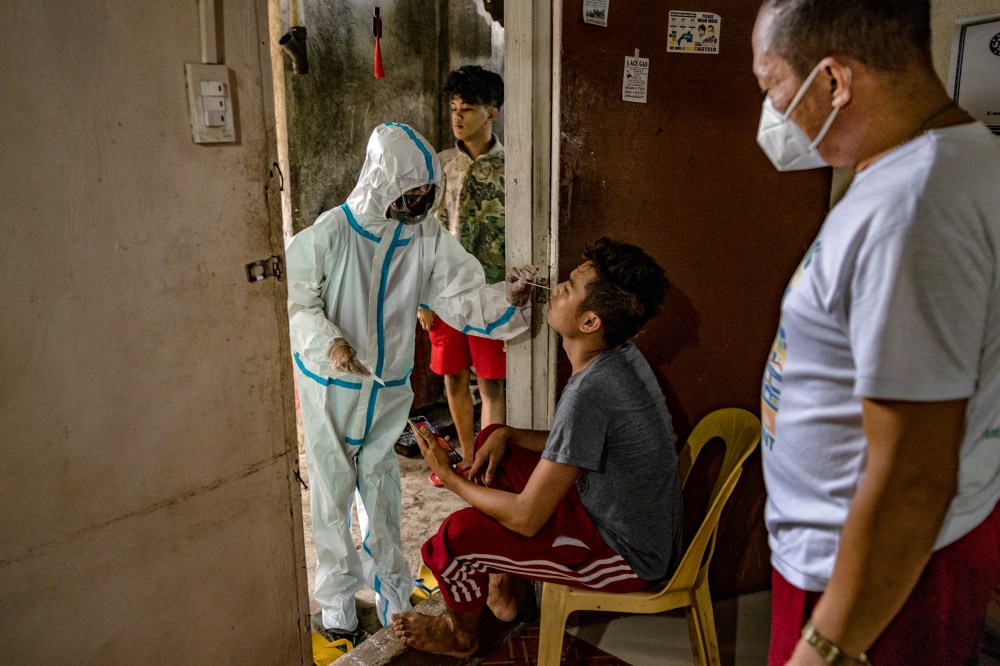
And yet the hardship of life under lockdown, which sent the country into its worst economic contraction since World War II, seems to have had little payoff. Since the onset of the second wave—triggered, some reports suggest, by new, more transmissible strains of the virus that causes COVID-19 spreading in the community after some social-distancing measures were lifted—hospitals have again been pushed to breaking point. The nation’s total COVID deaths have nearly doubled during the four months of the second wave, spiking from just over 12,300 on Mar. 1 to nearly 24,400 on June 27.
“People were dying at parking lots, even at home, because they could not find hospitals that would admit them. It was horrible,” is how Dr. Glenn Butuyan describes the start of the second wave. Media reports described medical supplies running low and ambulances becoming makeshift morgues, lining up outside crematoriums. Tragically, the country continues to dispatch medical workers around the globe, even as its own hospitals stand in dire need of health care personnel.
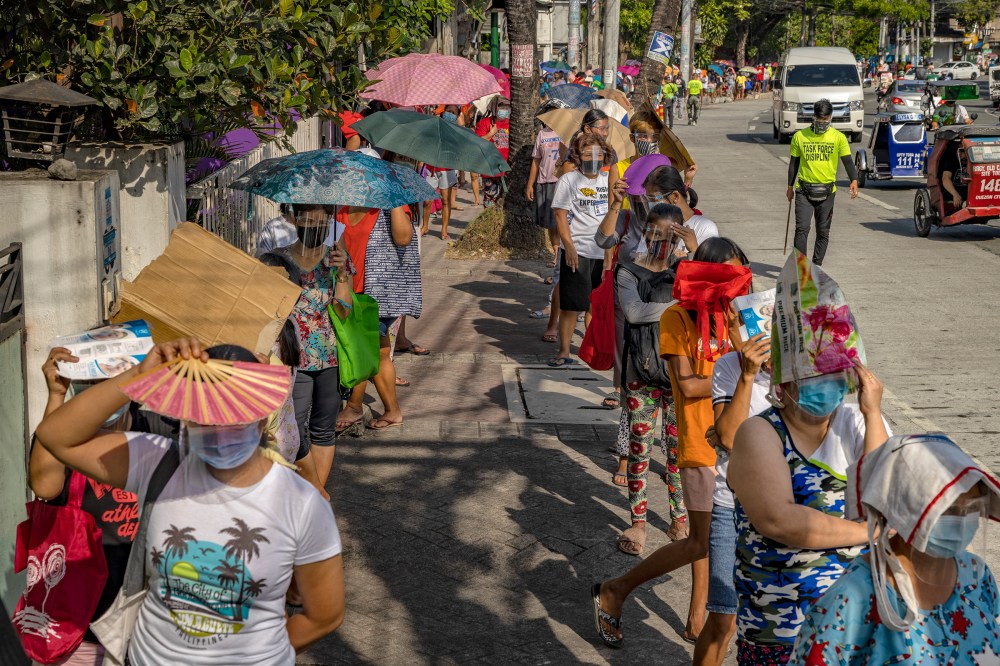
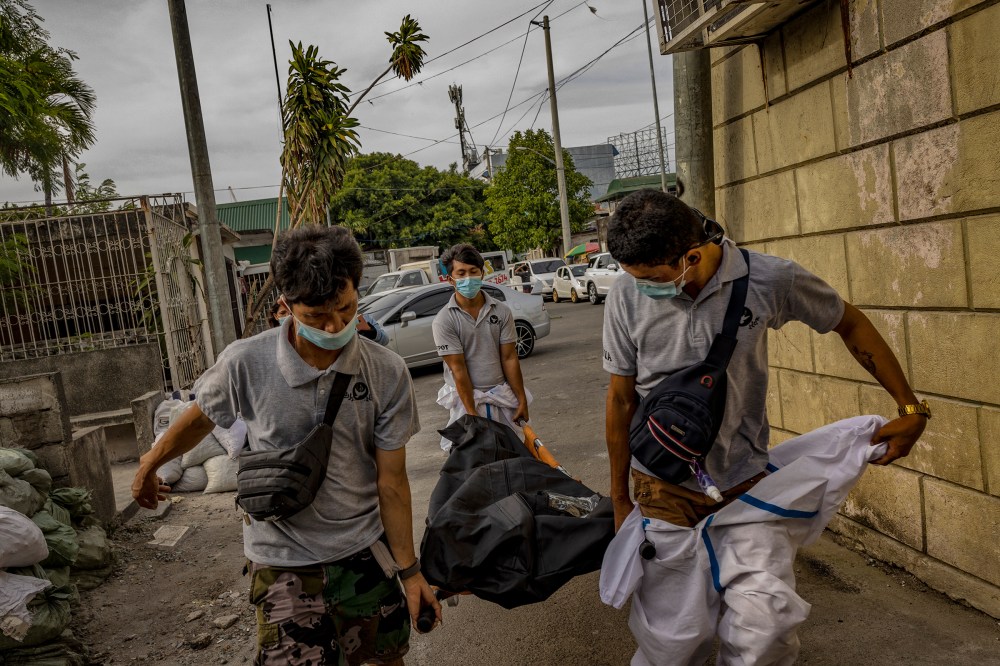

Today, the situation has stabilized somewhat. There were just over 6,096 new cases, by official count, reported on June 27—a small improvement on the situation a month earlier, when at least 7,000 cases were being logged every day.
But “Nurses are exhausted,” says Butuyan, who heads a hospital in Isabela province, about 250 miles (400 kilometers) north of Manila, and says he has been battling COVID-19 “without any financial support” from the government. (Health Secretary Francisco Duque III declined to be interviewed for this story, as did the health ministry’s spokesperson, undersecretary Maria Rosario Vergeire. Harry Roque, the presidential spokesperson, also declined to comment.)
“We don’t have enough rooms,” Butuyan tells TIME. “Medicines are difficult to procure. We are so tired.”
The mild, 54-year-old physician is well known in the Philippines for releasing a video message in early April that went viral. His call on the government to step up its efforts to contain the virus resonated with his long-suffering compatriots.
“I was frustrated. There were so many cases, the hospitals were overwhelmed, and we were not getting much help from agencies that should be helping front liners,” Butuyan says about his decision to release the video.
But he also used the message “to beg [people to shelter at home] because we could no longer handle people dying”—and that was harder to stomach for many Filipinos. Mark Vincent Navera is an aspiring accountant in Lipa City, about 50 miles (85 kilometers) south of the capital. He says repeated lockdowns have led to the cancellation of three professional examinations, costing him jobs that would have brought financial relief to his family, many of whom caught COVID-19. “At the rate we’re going, we’re still far from gaining our freedom,” he says.
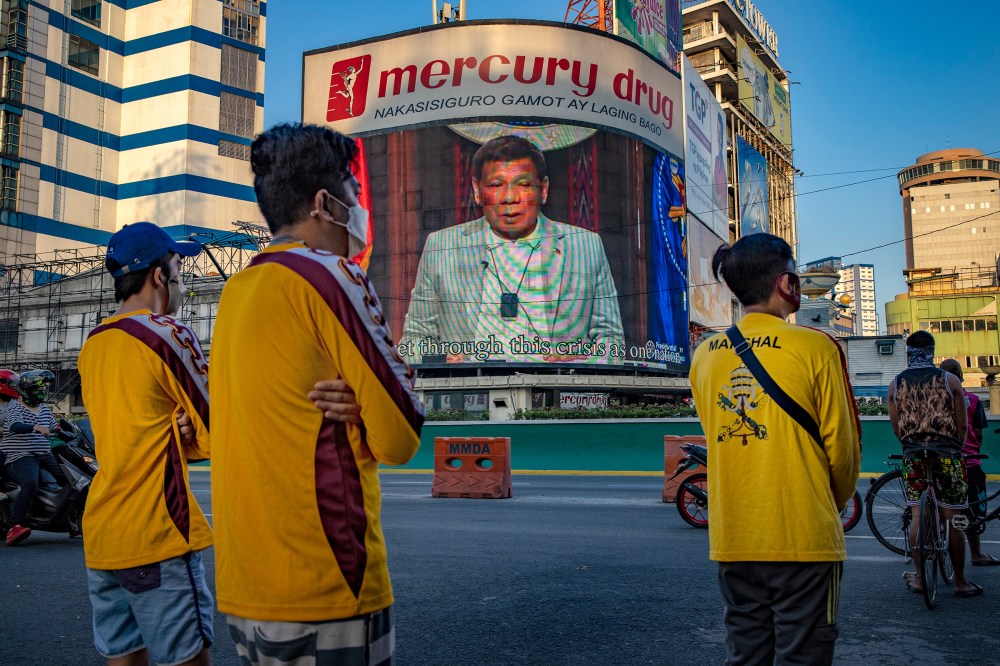
Poor leadership and lack of a coherent pandemic strategy have added to the country’s woes. President Duterte disappeared from public view as cases began to climb sharply in March. To allay questions about his health, photos of the president playing golf were released in early April, but the images conveyed an impression of remoteness from the suffering of ordinary Filipinos and were widely mocked.
When he finally resumed the weekly televised addresses to the nation that have been such a feature of the pandemic in the Philippines, Duterte was only able to offer the same solutions he has always favored: place affected areas under a total lockdown, put more police on the streets, impose stricter curfews, and arrest quarantine violators.
“There is no imagination,” the medical anthropologist Lasco tells TIME. It is hallmark medical populism, which he and his colleague define as a political style during “public health crises that pits ‘the people’ against ‘the establishment.’”
According to Lasco and Curato: “While some health emergencies lead to technocratic responses that soothe the anxieties of a panicked public, medical populism thrives by politicizing, simplifying, and spectacularizing complex public health issues.”
Figures like Duterte, Bolsonaro, Modi, and former U.S. president Donald Trump have downplayed the impact of the virus, spread false claims, and touted their own bizarre solutions to the problem, preventing scientists and doctors from leading the fight. As the first wave of the pandemic raged in India, Modi called for festivals of light and asked the air force to dispatch helicopters to shower hospitals with flower petals. Trump said he was taking anti-malarial drug hydroxychloroquine as a prophylactic against COVID-19, despite little evidence on its efficacy against the disease and evidence that misuse of the drug could cause harm. Brazil’s Bolsonaro infamously called COVID-19 “a little flu” and has continuously belittled mask wearing, even though he himself was diagnosed with COVID.
Instead of investing in testing or ensuring a timely rollout of vaccines, Duterte’s approach has been to put the Philippines on a war footing, which Lasco describes as part of the medical populist’s “pattern of spectacle.” The president appears on TV to give COVID-19 updates while flanked by top military brass and has appointed several military figures to senior positions in his campaign against the virus. With the country distracted by the pandemic, the administration has also cracked down on political opponents. On Mar. 7, at the start of the second wave, nine activists were shot dead in the so called “Bloody Sunday” raids around Manila.
Professor Ranjit Rye is a member of a research group from University of the Philippines that has been monitoring the pandemic. He says a big part of the problem is that “scientists are not prime movers” in the inter-agency task force created to handle the nation’s pandemic response. “Scientists and doctors are not treated as equals,” he says. “They are just one of the stakeholders there”—competing, the professor claims, with business interests who want the economy reopened.

If nothing is done to prop up the country’s ailing health system, Rye and his colleagues believe the Philippines could go the way of India—caught unprepared by a giant surge and hamstrung by a woeful shortage of resources, especially health care workers. One nurse, Czar Dancel, tells TIME that 8 out of his 10 colleagues are preparing to leave the country, mostly because of a lack of money. He reveals that his monthly hazard pay amounts to just 300 Philippine pesos—a little over $6—and even then he has yet to receive a single centavo of it.
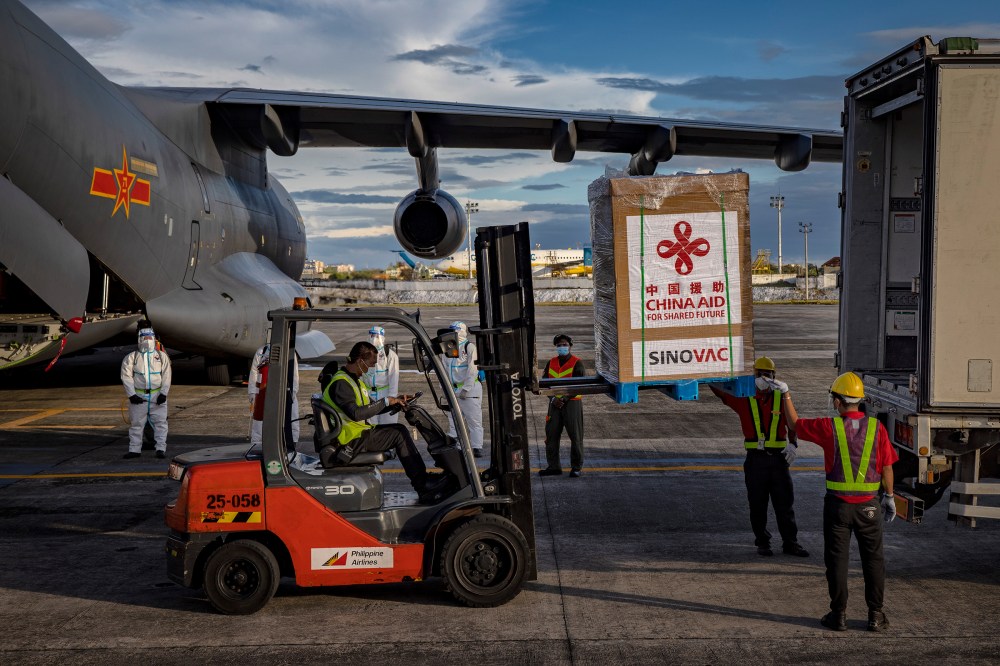
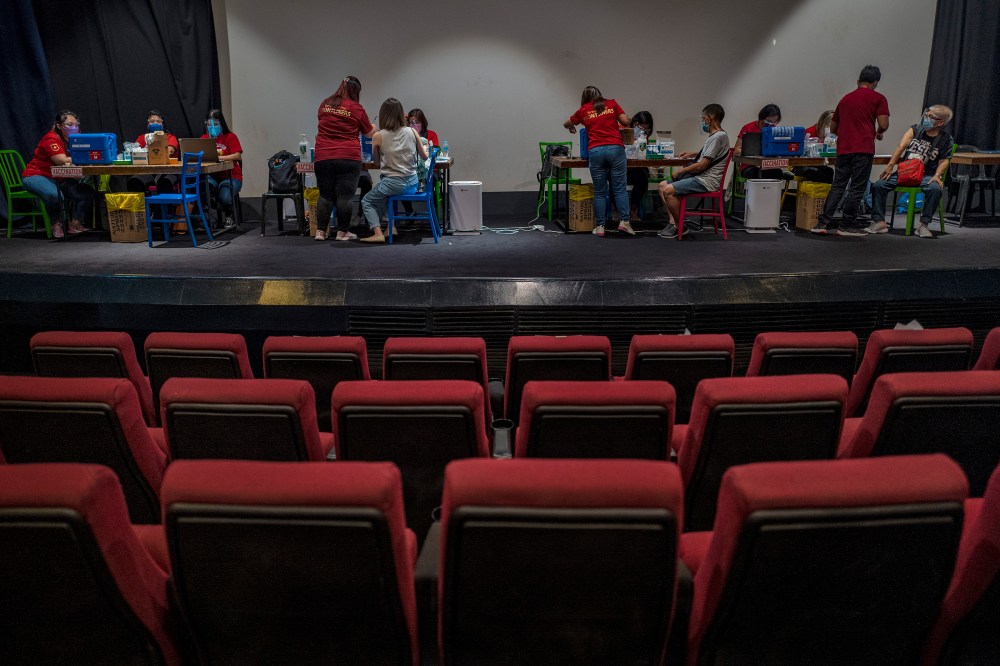
For the time being, the country’s pandemic response lurches onward under its erratic, authoritarian leader. Duterte has recently started espousing vaccinations as the country’s way out of the crisis, but its inoculation program didn’t begin until March, using donated CoronaVac jabs from China. Achieving herd immunity any time soon looks highly unlikely. Vaccine hesitancy is deep-rooted. Many Filipinos are refusing to be jabbed with Chinese-made shots and a recent poll found that fear of vaccination’s side effects was a major concern.
For now, that leaves further lockdowns and social-distancing as the chief means of preventing an even more severe outbreak among an already exhausted population.
“None of us thought lockdowns would be this long,” says Manila bookseller Honey de Peralta, who stays at home with two children and an elderly parent. “None of us expected we would go back to square one.”
More intimidation could also be on the cards. On June 21, Duterte threatened to jail anyone refusing to be vaccinated. “You choose, vaccine or I will have you jailed,” he warned on television.
“We have the same set of responses, and there’s no willingness to acknowledge the mistakes of the past,” says Lasco. “It’s hard to feel optimistic.”


