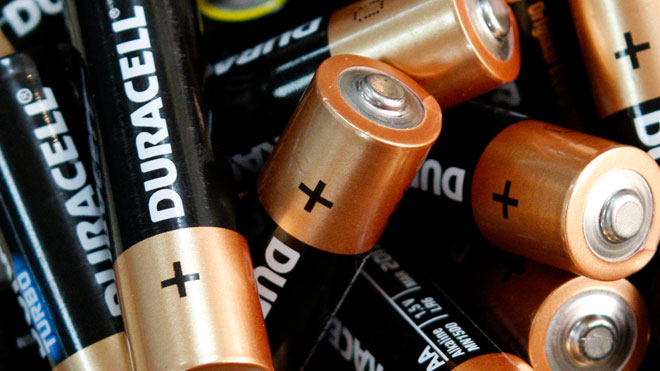
Warren Buffett's Duracell sued by Energizer
Energizer is seeking damages for false advertising
via FOX BUSINESS NEWS https://ift.tt/2o9wqh9
(BEIJING) — China’s Communist Party celebrated its 70th anniversary in power with a military parade Tuesday that showcased its growing might and strategic ambitions.
An honor guard carrying the Chinese flag through Tiananmen Square, the country’s symbolic political heart, before thousands of spectators who waved flags. Artillery guns fired a salute.
President Xi Jinping, wearing a gray Mao jacket, and other Chinese leaders, including former Presidents Hu Jintao and Jiang Zemin, watched from atop the Gate of Heavenly Peace at the square’s north end.
“No force can shake the status of our great motherland, and no force can stop the progress of the Chinese people and the Chinese nation,” Xi said in a nationally televised speech.
Xi rode in an open-topped limousine past dozens of rows of truck-mounted missiles, armored personnel carriers and other military gear. Soldiers in helmets and combat gear shouted, “Hello, leader!” and “Serve the people!” Xi replied, “Hello, comrades.”
The event marks the anniversary of the Oct. 1, 1949, announcement of the founding of the People’s Republic of China by then-leader Mao Zedong following a civil war.
The parade follows Xi’s promise in a speech Monday to allow Hong Kong to manage its own affairs despite anti-government protests that have embarrassed the ruling party ahead of the year’s highest-profile propaganda event.
The parade through central Beijing is due to include 15,000 troops and more than 160 aircraft.
Chinese news reports say it might include a new long-range nuclear-armed missile and a supersonic drone aircraft. Military spokespeople have declined to give details.

SACRAMENTO, Calif. (AP) — Defying the NCAA, California opened the way Monday for college athletes to hire agents and make money from endorsement deals with sneaker companies, soft drink makers, car dealerships and other sponsors, just like the pros.
The first-in-the-nation law, signed by Democratic Gov. Gavin Newsom and set to take effect in 2023, could upend amateur sports in the U.S. and trigger a legal challenge.
Newsom and others cast it as an attempt to bring more fairness to big-money college athletics and let players share in the wealth they create for their schools. Critics have long complained that universities are getting rich off the backs of athletes — often, black athletes struggling to get by financially.
“Other college students with a talent, whether it be literature, music, or technological innovation, can monetize their skill and hard work,” the governor said. “Student athletes, however, are prohibited from being compensated while their respective colleges and universities make millions, often at great risk to athletes’ health, academics and professional careers.”
Newsom predicted other states will introduce similar legislation.
The NCAA — which had called on him to veto the bill, arguing that it would destroy the distinction between amateurs and pros and give California an unfair recruiting advantage — said it is considering its next steps. It did not elaborate.
In a statement, the NCAA said it is working to revise its rules on making money off a player’s name and likeness. But it said any changes should be made at the national level through the NCAA, not through a patchwork of state laws.
California’s law applies to students at both public and private institutions — but not community colleges — in the nation’s most populous state. While the measure covers all sports, the big money is in football and basketball.
Student athletes won’t get salaries. But under the law, they can’t be stripped of their scholarships or kicked off the team if they sign endorsement deals.
There are some limitations: Athletes can’t enter into deals that conflict with their schools’ existing contracts. For example, if your university has a contract with Nike, you can’t sign with Under Armour.
The law represents another instance of California jumping out in front of other states when it comes to social and political change. The movement to allow student athletes to profit from their labors on the court or the playing field has been simmering for years, portrayed as a matter of economic fairness and civil rights.
“A majority of these athletes, it’s no secret, are African American,” said Sen. Steven Bradford, a co-author of the bill who is black. “It’s an issue of fairness, and it’s an issue that has been long overdue.”
Newsom tweeted a video showing him signing the law during a special episode of HBO’s “The Shop: Uninterrupted” alongside NBA superstar LeBron James, one of many professional athletes who have endorsed the measure.
James, whose 14-year-old son is a closely watched basketball prospect in Los Angeles and will be 18 when the law takes effect, exulted over its signing on Instagram, saying it will “change the lives for countless athletes who deserve it!”
He added: “NCAA, you got the next move. We can solve this for everyone!”
NBA rookie Jordan Poole of the Golden State Warriors also welcomed the new law. Six months ago, as a player at the University of Michigan, he hit a game-winning shot at the buzzer in the second round of the NCAA tournament as millions watched on TV.
“I know for sure I would have been using my name after that Houston shot,” he said.
His teammate, three-time NBA champion Draymond Green, went further.
“The NCAA is a dictatorship,” the former Michigan State star told reporters Monday. “I’m tired of seeing people get ripped off, and I’m tired of seeing these college athletes being ripped off.”
Before the governor signed the law, the NCAA threatened to bar California universities from competition, meaning powerhouses such as the University of Southern California, UCLA, Stanford and the University of California, Berkeley, could find themselves banned.
If that were to happen, California schools could form a new governing body and get schools from like-minded states to join, in a threat to the NCAA’s dominance.
But the governor, a former college baseball player, said he doubts the NCAA would kick California schools out, arguing that the state’s 40 million people and status as the world’s fifth-largest economy make it too big to lose.
The NCAA “can’t afford to do that,” he said.
Democratic state Sen. Nancy Skinner, the bill’s author, said it could especially help female athletes, who have limited opportunities for professional sports once they leave college.
“College is the primary time when the spotlight is on” them, Skinner said. “For women, this might be the only time they could make any money.”
NCAA rules bar players from hiring agents. The NCAA has also steadfastly refused to pay players in most cases. But a committee is studying other ways players could make money. Its report is expected in October.
The NCAA does let some athletes accept money in some instances. Tennis players can accept up to $10,000 in prize money per year, and Olympians can accept winnings from their competitions. Also, many schools pay players yearly cost-of-living stipends of $2,000 to $4,000.
“We just kind of joked every kid is going to want to go to college out here in Cali now,” Warriors forward Glenn Robinson III, who played college ball at Michigan, said of the new law.
“I think it’s time. A lot of people are waking up and starting to see how much money that these universities are making off of players,” he added. “Where I went to school, a lot of players couldn’t afford lunch.
___
AP sports writer Janie McCauley contributed reporting from San Francisco.

(BANGKOK) — Their story gripped the world: determined divers racing against time and water to rescue 12 boys and their soccer coach trapped for more than two weeks in a flooded cave deep inside a northern Thai mountain.
The ordeal in late June and early July 2018 had barely ended when filmmakers began their own race to get the nail-biting drama onto cinema screens. The first of those projects will premiere this weekend, when director Tom Waller’s “The Cave” shows at the Busan Film Festival in South Korea.
The film was shot over three months earlier this year and has been in post-production since then. The 45-year-old Thai-born, British-raised filmmaker said the epic tale of the Wild Boars football team was a story he simply had to tell.
The boys and their coach entered the Tham Luang cave complex after soccer practice and were quickly trapped inside by rising floodwater. Despite a massive search, the boys spent nine nights lost in the cave before they were spotted by an expert diver. It would take another eight days before they were all safe.
Waller was visiting his father in Ireland when he saw television news accounts of the drama.
“I thought this would be an amazing story to tell on screen,” he said.
But putting the parts together after their dramatic rescue proved to be a challenge. Thailand’s government, at the time led by a military junta, became very protective of the story, barring unauthorized access to the Wild Boars or their parents. Waller often feared his production might be shut down.
His good fortune was that the events at the Tham Luang cave in Chiang Rai province had multiple angles and interesting characters. Especially compelling were the stories of the rescuers, particularly the expert divers who rallied from around the world. He decided to make a film “about the volunteer spirit of the rescue.”
Other people proposed telling the story from the point of view of the boys, and Netflix nailed down those rights in a deal brokered by the Thai government.
“I took the view that this was going to be a story about the people we didn’t know about, about the cave divers who came all the way from across the planet,” Waller said. “They literally dropped everything to go and help, and I just felt that that was more of an exciting story to tell, to find out how these boys were brought out and what they did to get them out.”
Waller even had more than a dozen key rescue personnel play themselves.
Waller said they were natural actors, blending in almost seamlessly with the professionals around them, and helped by the accuracy of the settings and the production’s close attention to detail.
“What you are really doing is asking them to remember what they did and to show us what they were doing and what they were feeling like at the time,” he said. “That was really very emotional for some of them because it was absolutely real.”
Waller said his film is likely to have a visceral effect on some viewers, evoking a measure of claustrophobia.
“It’s a sort of immersive experience with the sound of the environment, you know, the fact that is very dark and murky, that the water is not clear,” he said.
“In Hollywood films, when they do underwater scenes, everything is crystal clear. But in this film it’s murky and I think that’s the big difference. This film lends itself to being more of a realistic portrayal of what happened.”
Some scenes were filmed on location at the entrance to the actual Tham Luang cave, but most of the action was shot elsewhere, Waller said.
“We filmed in real water caves that were flooded, all year-round,” he said. “It is very authentic in terms of real caves, real flooded tunnels, real divers and real creepy-crawlies in there. So it was no mean feat trying to get a crew to go and film in these caves.”
“The Cave” goes on general release in Thailand on Nov. 28.

LIMA, Peru (AP) — Peruvian President Martín Vizcarra dissolved congress Monday, exercising seldom used executive powers to shut down the opposition-controlled legislature that he accuses of stonewalling attempts to curb widespread corruption.
In a televised address, Vizcarra told the South American nation that he had decided to call new legislative elections after lawmakers proceeded with holding a controversial vote to replace almost all the members of the Constitutional Tribunal.
“We are making history that will be remembered by future generations,” he said. “And when they do, I hope they understand the magnitude of this fight that we are in today against an endemic evil that has caused much harm to our country.”
The stunning turn could spell new instability as Peru grapples with the fallout of the Odebrecht corruption scandal, plummeting faith in public institutions and an inexperienced president struggling to govern.
Nonetheless, Vizcarra’s decision is likely to be widely welcomed by Peruvians who have been clamoring for new congressional elections to replace the majority party, led by a former first daughter and presidential candidate who is now behind bars.
“Peruvians will not shed many tears,” said Steven Levitsky, a Harvard University political scientist who has extensively studied the nation.
Opposition leaders denounced the move as the work of a “dictator” and proceeded with pushing an impeachment vote against him, though it would carry only symbolic weight since their positions in congress are now considered vacated.
“This was the plan from the start,” said Milagros Salazar, a spokeswoman for Fuerza Popular, the party of Keiko Fujimori, the daughter of former President Alberto Fujimori who was once a commanding force herself in the country’s politics but is now jailed. “They think this is a monarchy, that’s what they want to impose.”
Vizcarra, then the vice president, rose to the presidency last year after President Pedro Pablo Kuczynski resigned following revelations that his private consulting firm had received undisclosed payments from Odebrecht, the Brazilian construction giant that has admitted to dolling out millions of dollars to politicians around Latin America in exchange for lucrative public works contracts.
Though with little political expertise on his resume, Vizcarra rose in popularity as he championed anti-corruption initiatives. But he struggled to push legislation through congress, instead repeatedly utilizing a “vote of confidence” through which he could threaten to dissolve the legislature if lawmakers didn’t approve his proposals.
The mechanism is aimed at resolving conflicts between the executive and legislative branch and allows the president to shut down congress if lawmakers reject two such votes. Congress rejected a previous vote of confidence during Kuczynski’s administration.
Most recently, Vizcarra chastised lawmakers for rushing to a vote on replacing six of the seven magistrates on the Constitutional Tribunal. The court is expected to decide several important cases in the months ahead, including a habeas corpus request to free Fujimori, who is being held as prosecutors investigate her for allegedly laundering money from Odebrecht.
Though the terms for all six magistrates had expired, Vizcarra, legal observers and human rights organizations criticized the congressional action for its speed and lack of transparency. The newspaper El Comercio reported Monday that six of the candidates up for consideration are facing potential criminal or civil charges for offenses including kidnapping, extortion and sex abuse.
Peru’s judicial system is notoriously corrupt, with judges caught on wiretaps negotiating deals on sentences for serious crimes.
Vizcarra warned he would dissolve congress if legislators went ahead with the magistrate votes before weighing his own proposal for reforming how magistrates are selected.
But lawmakers pushed forward in defiance Monday, accusing Vizcarra of blocking what should be a “simple procedure” conducted in accordance with the law.
“The political crisis we’re in is only Vizcarra’s fault,” legislator Mauricio Mulder said.
It is not the first time in Peru’s history that a president has dissolved congress. In 1992, Alberto Fujimori shut down congress, assumed legislative powers and suspended the constitution in what was regarded as an auto-coup.
In contrast, Vizcarra’s shutdown is likely to be considered a legitimate use of constitutional powers celebrated by Peruvians who have little faith in elected leaders, Levitsky said.
Nonetheless, he added, dissolving the congress is likely to do relatively little to resolve deeper, structural issues. The Fujimorista bloc will likely lose its majority in a new election, but Levitsky said what could emerge is a fractious congress full of inexperienced legislators.
“For now democracy is probably safe because everyone is weak,” he said. “That guarantees a certain pluralism, but that leaves Peru vulnerable to a demagogic politician.”
___
Associated Press writer Franklin Briceño reported this story in Lima and AP writer Christine Armario reported from Bogota, Colombia.

Hong Kong braced for widespread protests Tuesday as activists announced plans to use China’s National Day to continue their push for democratic reform.
The raising of the Chinese flag took place without incident at 8:00 a.m. local time, but in subdued fashion. The public were not invited and VIPs attending the ceremony were asked for security reasons to gather at the Hong Kong Convention and Exhibition Center to watch the event on closed circuit television.
The surrounding streets were on lockdown. However, a small procession by the League of Social Democrats political party was able to approach within a few hundred meters of the venue carrying banners that read “No national celebration, only national tragedy” and “End authoritarianism.”
Addressing the small gathering, longtime dissident and former legislator Leung Kwok-hung, said: “With no democracy, Hong Kong will not have a future.” Afterward, he told TIME: “If there [is no] right to choose our leaders, to have self-governance, and if there is one-party rule, what is there for us to celebrate?”
Earlier, chairman Avery Ng said that the party’s warehouse had been broken into and vandalized by a dozen men and that party members were being followed.
Local media meanwhile reported that 6,000 police had been deployed in anticipation of citywide unrest. The city’s subway operator, which has come under sustained attacked by protesters who accuse it of colluding with police, shut several key stations. Many shopping malls also brought down their shutters and major office buildings took precautions against vandalism and criminal damage.
Police are fearing widespread violence—even acts of terrorism. At a press conference, Monday, chief superintendent Tse Chun-chung said: “We have intelligence suggesting that some hardcore violent protesters are inciting others, including those with suicidal tendencies, to commit extreme acts like murdering the police, disguising as police officers to kill others, and setting fires in petrol stations … All acts are one step closer to terrorism.”
However, his remarks were immediately derided by protesters, who said that the sources of the intelligence were bogus.
Several protests took place over the weekend in the run up to National Day, which commemorates the 70th anniversary of the founding of the People’s Republic. Demonstrators lobbed petrol bombs at government offices, set fires in the streets, burned the Chinese flag and tore down banners advertising National Day celebrations, while police responded with tear gas and water cannon.
Semi-autonomous Hong Kong has endured four months of unrest, sparked by a now withdrawn extradition bill that would have allowed rendition of fugitive suspects to China for the first time. The protests quickly expanded into a push for greater political freedom and, more recently, calls for self-determination.
The former British possession was retroceded to China in 1997 after 156 years of colonial rule, but its 7.2 million inhabitants remain culturally and linguistically distinct from mainland Chinese. Surveys have found that the majority of people in Hong Kong identify as “Hongkongers” and not as Chinese.

As tensions over an impeachment inquiry of President Donald Trump continue to heat up on Capitol Hill, both Democrats and Republicans are focused on a single man: Rep. Adam Schiff.
Many Democratic lawmakers see Schiff, the chairman of the House Intelligence Committee, as the natural choice to head up the impeachment inquiry. A group of moderate, first-term Democratic members met with House Speaker Nancy Pelosi on Thursday to urge her to elevate Schiff as the public face of the inquiry, according to four Congressional officials.
This group of lawmakers, who were mostly from swing districts and therefore in danger of losing their re-election bids next year, told the Speaker they see Schiff as a better choice than Judiciary Committee Chairman Jerry Nadler, another top Democrat. Nadler is seen as more partisan, the sources said.
But as Schiff’s star rises among Democrats, he is increasingly the target of Republicans’ ire.
On Monday morning, Trump attacked on the representative from California on Twitter. “Rep. Adam Schiff illegally made up a FAKE & terrible statement,” the President wrote. “It bore NO relationship to what I said on the call. Arrest for Treason?”
Trump’s tweet was in reference to Schiff’s flippant comments during a Sept. 26 hearing with Joseph Maguire, who became the acting spy chief in August. During the hearing, Schiff characterized Trump’s July 25 phone call with Ukrainian President Volodymyr Zelensky as a “classic organized crime shakedown.”
“Shorn of its rambling character and in not so many words, this is the essence of what the President communicates,” Schiff said in prepared remarks. He then proceeded to imitate the President’s recognizable cadence of speech: “I’m going to say this only seven times, so you better listen good,” Schiff said, speaking as Trump. “I want you to make up dirt on my political opponent, understand? Lots of dirt, on this and on that.”
Republicans, including House Minority Leader Kevin McCarthy and Rep. Elise Stefanik, argued that Schiff’s comments were inappropriate.
“It is disturbing and outrageous that Chairman of the House Intelligence Committee Adam Schiff opens up a hearing of this importance with improvised fake dialogue,” Stefanik, a New York Republican, wrote on Twitter.
Democratic members of the House Intelligence Committee reached for comment defended Schiff’s characterization of the call. One argued in a message on background that Republicans were “grasping for straws” by criticizing Schiff over the comments, saying “they have nothing else.”
“Anyone else who thinks Schiff was ‘wrong’ is merely pearl-clutching and underestimating the intelligence of the typical person who would even know who Adam Schiff is, let alone had listened to his opening statement at a committee hearing,” says T.J. Helmstetter, a former Democratic National Committee spokesman who now advises progressive organizations. “Schiff’s rhetorical device was perhaps slightly clumsy, but it was also clear to the intended audience of highly engaged people.”
Schiff also defended his own characterization of Trump’s phone call, arguing that while he did not quote the transcript of the phone call verbatim, he correctly relayed “the message” of the call.
“My summary of the President’s call was meant to be at least, part, in parody,” he said. “Of course, the President never said, ‘If you don’t understand me, I’m going to say it seven more times.’ My point is, that’s the message.”
Trump’s Monday attacks on Schiff came after a similar outburst on Friday, when the President tweeted that Schiff had “fraudulently read to Congress” a version of the July 25 phone call. Trump said that Schiff “was supposedly reading the exact transcribed version of the call, but he completely changed the words.” Schiff did not say he was reading from the transcript.
Trump’s suggestion that Schiff’s comments amounted to treason came just days after the President described the sources of the whistleblower’s complaint in similar terms. The whistleblower submitted a complaint flagging Trump’s possible abuse of power during the phone call with Zelensky. Trump said the whistleblower’s actions made them “almost a spy.”
“We used to handle” spies and treason “a little differently than we do now,” Trump told a private group, to appreciative laughter.
According to the rough transcript of the call released by the White House, Trump underscored the United States’ generosity towards Ukraine before asking Zelensky “to do us a favor.” He goes on to say he would like the Ukrainian government to investigate three issues involving the U.S., including investigating Democratic presidential candidate Joe Biden’s involvement in a case involving Biden’s son.
“I will say that we do a lot for Ukraine. We spend a lot of effort and a lot of time,” Trump told Zelensky, according to the White House’s rough transcript. A little while later, Trump says, “I would like you to do us a favor though because our country has been through a lot and Ukraine knows a lot about it.” The conversation between the two leaders occurred soon after the Trump administration withheld nearly $400 million in congressionally approved aid for the country.
Trump also told Zelensky that his personal lawyer, Rudy Giuliani, and Attorney General William Barr should be involved.
The transactional nature of the call alarmed Democrats and prompted Schiff’s description of the call as a “shakedown.”
“You know what I’m asking, so I’m only going to say this a few more times, in a few more ways,” Schiff said during the hearing, imitating the President’s speech patterns. “And by the way, don’t call me again. I’ll call you when you’ve done what I asked.”
—With reporting by Lissandra Villa

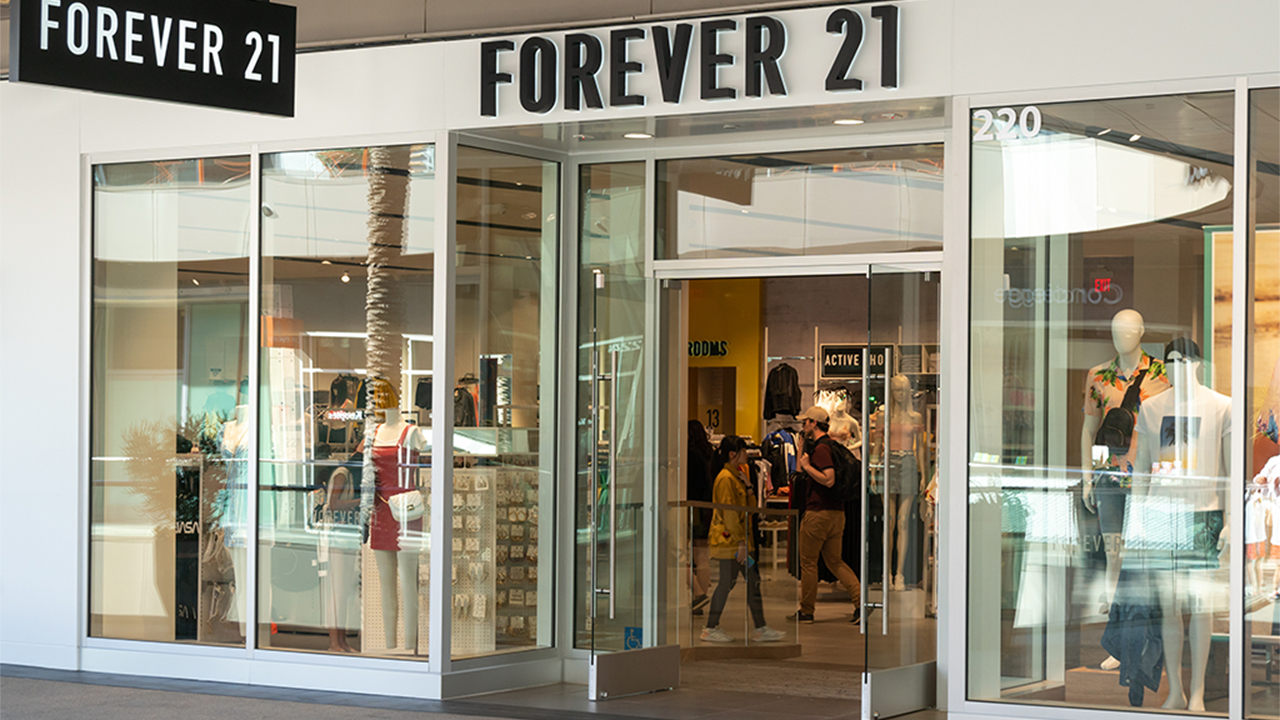
(NEW YORK) — Low-price fashion chain Forever 21, a one-time hot destination for teen shoppers that fell victim to its own rapid expansion and changing consumer tastes, has filed for Chapter 11 bankruptcy protection.
The privately held company based in Los Angeles said Sunday it will close up to 178 stores in the U.S. As of the bankruptcy filing, the company operated about 800 stores globally, including more than 500 stores in the U.S.
The company said it would focus on maximizing the value of its U.S. stores and shutter certain international locations. Forever 21 plans to close most of its locations in Asia and Europe but will continue operating in Mexico and Latin America.
“The decisions as to which domestic stores will be closing are ongoing, pending the outcome of continued conversations with landlords,” it said in the statement. “We do, however, expect a significant number of these stores will remain open and operate as usual, and we do not expect to exit any major markets in the U.S.”
Forever 21 joins Barneys New York and Diesel USA in a growing list of retailers seeking bankruptcy protection as they battle online competitors. Others like Payless ShoeSource and Charlotte Russe have shut down completely.
The numbers bear out the crisis facing traditional retailers. So far this year, publicly traded U.S. retailers have announced they will close 8,558 stores and open 3,446, according to the global research firm Coresight Research. That compares with 5,844 closures and 3,258 openings in all of 2018.
Coresight estimates the store closures could number 12,000 by the end of 2019.
Forever 21 was founded in 1984 and, along with other so-called fast fashion chains like H&M and Zara, rode a wave of popularity among young customers that took off in the mid-1990s.
Their popularity grew during the Great Recession, when shoppers sought fashion bargains.
But over the last year or so, fast fashion has fallen out of style. Young customers are losing interest in throw-away clothes and are more interested in buying eco-friendly products. They’re also gravitating toward rental and online second-hand sites like Thredup, where they see clothes worn again instead of ending up in a landfill.
These trends are happening while discounters like Target have spruced up their fashion assortments, stealing away customers.
Forever 21 has also been more vulnerable than some other chains because of its large footprints in major malls, which are attracting fewer shoppers.


Montana Gov. Steve Bullock declared an emergency Sunday for areas hit by an early-season snowstorm.
The storm was bringing heavy, wet snow and high winds that closed roads, downed trees and caused scattered power outages.
Bullock’s declaration allows the state to mobilize resources to help affected areas.
Winter storm warnings were posted for parts of western Montana, northern Idaho and northeast Washington. Snow also was forecast for areas in Wyoming, Utah, Oregon, Nevada and California.
The brunt of the storm hit Montana where up to 2 feet (61 centimeters) of snow fell Saturday in the mountains and a record 14 inches (35.5 centimeters) fell in Great Falls with snow still falling Sunday.
The storm was expected to wind down late Sunday and early Monday.

(LONDON) — British Prime Minister Boris Johnson denied wrongdoing Sunday over his links to an American businesswoman who allegedly received money and favorable treatment because of their friendship during his time as mayor of London.
Asked during a BBC interview about his ties to tech entrepreneur and model Jennifer Arcuri, Johnson sought to suggest that political motivations were behind the decision Friday by the Greater London Authority to refer a conduct matter to a police watchdog agency.
The matter arose from a Sunday Times report saying Arcuri was given 126,000 pounds in public money and privileged access to trade missions to the United States, Israel and Asia that Johnson led as mayor, even though her fledgling business had not yet met eligibility requirements for such trips.
“Everything was done in accordance with the code … and everything was done with full propriety,” Johnson said Sunday. When pressed again by BBC journalist Andrew Marr, Johnson added: “There was no interest to declare.”
The scandal worsened Sunday as Johnson’s Conservative Party was opening its annual party conference in Manchester following a tumultuous week for a leader who has only been in the job since July.
In just the last few days, the U.K. Supreme Court declared Johnson’s attempt to suspend Parliament illegal and he cut short a trip to the United States, racing home to face the House of Commons, where lawmakers greeted him with cries of “Resign!” He then lost a vote on a normally routine matter — a request to adjourn for a week so that Conservatives could attend their conference.
Complicating things further, questions were raised about the 55-year-old Johnson’s links to Arcuri, now 34, who set up a cyber firm in East London after moving to the capital seven years ago.
Yet even as the British leader visited North Manchester General Hospital on Sunday to talk about his government’s plans to build 40 hospitals, his efforts failed to change the subject.
“Let’s be absolutely clear, I am very, very proud of everything that we did and certainly everything that I did as mayor of London,” he said, adding that the current London mayor, Sadiq Khan of the Labour Party, “could possibly spend more time investing in police officers than he is investing in press officers and peddling this kind of stuff.”
The independent office, which oversees police complaints in England, was asked to consider if there were grounds to investigate Johnson for misconduct in public office. The authority said Friday it had a “statutory duty” to record the matter because Johnson served as police commissioner during his 2008-2016 tenure as London’s mayor.
The probe is the latest sign of animosity that has consumed British politics since the country narrowly voted in 2016 to leave the European Union. Three years later, Britain and its politicians remain bitterly divided over how, or even whether, to leave the 28-nation bloc.
Johnson took power two months ago with a “do-or-die” promise that Britain will leave the EU on the scheduled date of Oct. 31 — even if there’s no divorce deal outlining Britain’s commercial relations with the other 27 EU nations. His foes in Parliament are determined to avoid a no-deal exit, which economists say would plunge Britain into recession.
In unusually heated debate Wednesday, Johnson referred to an opposition law ordering a Brexit delay as the “Surrender Act” and said postponing the country’s departure would “betray” the people. He also brushed off concerns that his forceful language might endanger legislators as “humbug.”
Opponents accused him of fomenting hatred in the country with his populist, people-versus-politicians rhetoric.
As tempers smoldered, Johnson rejected the notion that he himself had played a role in whipping up tensions.
“I think I’ve been a model of restraint,” Johnson said Sunday. “But I think everybody should calm down.”


